Creatine: The One Supplement That Actually Has Evidence Behind It
The supplement industry is 99% garbage, but creatine is the exception. Backed by decades of research, it builds strength, muscle, and brain power. Here is the no-BS guide on how to take it, why it works, and why it's all you need.
The Multibillion-Dollar Lie
Walk into any supplement store, and you are immediately assaulted by walls of neon plastic tubs. They promise to turn you into a Greek god, shred your body fat, and boost your testosterone to superhuman levels. The marketing is aggressive, the labels are covered in proprietary blends, and the prices are extortionate.
Here is the uncomfortable truth: 99% of it is complete garbage.
Branched-Chain Amino Acids (BCAAs) are glorified, expensive flavored water. Fat burners are just caffeine pills mixed with ingredients that make your skin itch. Over-the-counter testosterone boosters are a tax on men who are too lazy to fix their sleep, diet, and training. The supplement industry is a multibillion-dollar machine built on your insecurities and your desire for a shortcut.
But there is one anomaly. There is one supplement that cuts through the noise, the marketing BS, and the placebo effect. It is cheap, it is safe, and it is backed by over 500 peer-reviewed scientific studies.
That supplement is creatine.
If you are a man serious about self-improvement, optimizing your physical output, and getting a measurable return on your investment, creatine is the only performance supplement you actually need. Here is exactly what it does, how it works, and the precise protocol you need to start using it today.
The Biological Engine: How Creatine Works
To understand why creatine is so effective, you need to understand how your body produces energy.
Your muscles run on a molecule called ATP (Adenosine Triphosphate). Think of ATP as the currency your body uses to pay for physical exertion. When you lift a heavy weight, sprint, or perform any high-intensity action, your muscles spend ATP.
When ATP is used, it loses a phosphate molecule and becomes ADP (Adenosine Diphosphate). ADP is useless for energy. To keep working hard, your body needs to convert that ADP back into ATP, and it needs to do it fast.
This is where creatine steps in.
Creatine is naturally stored in your muscles as phosphocreatine. It acts as a backup reservoir of phosphate molecules. When your ATP levels drop during a heavy set of bench presses, phosphocreatine rapidly donates its phosphate to the ADP, instantly creating fresh ATP.
In practical terms, what does this mean for you? It means when you are grinding out a heavy set of squats and you usually hit failure at 6 reps, creatine gives your energy system the raw materials to push out a 7th or 8th rep.
It does not do the work for you. It does not magically build muscle while you sit on the couch. It simply raises your biological ceiling, allowing you to train harder, lift heavier, and accumulate more volume over time. That extra volume is what forces your body to adapt, grow, and get stronger.
The Evidence: Why You Cannot Argue with the Data
Creatine is not a new, experimental compound. It gained mainstream attention after the 1992 Barcelona Olympics when British track and field athletes used it to dominate their events. Since then, it has become the most heavily researched sports supplement in human history.
The data is unequivocal. When paired with resistance training, creatine supplementation consistently demonstrates the following benefits:
1. Measurable Strength Increases
Studies consistently show that adding creatine to a training program increases maximal strength and power output by 5% to 15% compared to training alone. If you are stuck at a plateau on your deadlift or overhead press, saturating your muscles with creatine is the most reliable nutritional intervention to break through that wall.
2. Accelerated Muscle Hypertrophy
Creatine builds muscle through two primary mechanisms. First, by allowing you to lift more weight for more reps, it increases the mechanical tension on your muscle fibers—the primary driver of growth. Second, creatine draws water into the muscle cell. This is known as intracellular hydration. This cellular swelling not only makes your muscles look fuller and denser, but it also acts as an anabolic signal, triggering protein synthesis and reducing protein breakdown.
3. Cognitive Enhancement and Brain Function
This is the benefit most men ignore, but it is arguably one of the most valuable. Your brain requires a massive amount of ATP to function, especially during complex tasks or when sleep-deprived. Research has shown that creatine supplementation increases brain phosphocreatine stores. Studies demonstrate that creatine improves short-term memory, enhances reasoning skills, and mitigates mental fatigue, particularly in high-stress scenarios or after a night of poor sleep. It is not just a meathead supplement; it is a cognitive optimizer.
The Protocol: How to Take It (The No-BS Guide)
Because creatine is so effective, supplement companies are constantly trying to reinvent it so they can charge you more money. They will try to sell you Creatine HCL, Creatine Ethyl Ester, or liquid creatine, claiming superior absorption or zero bloating.
Ignore all of it. It is marketing spin designed to separate you from your cash. Here is the only protocol you need to follow:
The Form
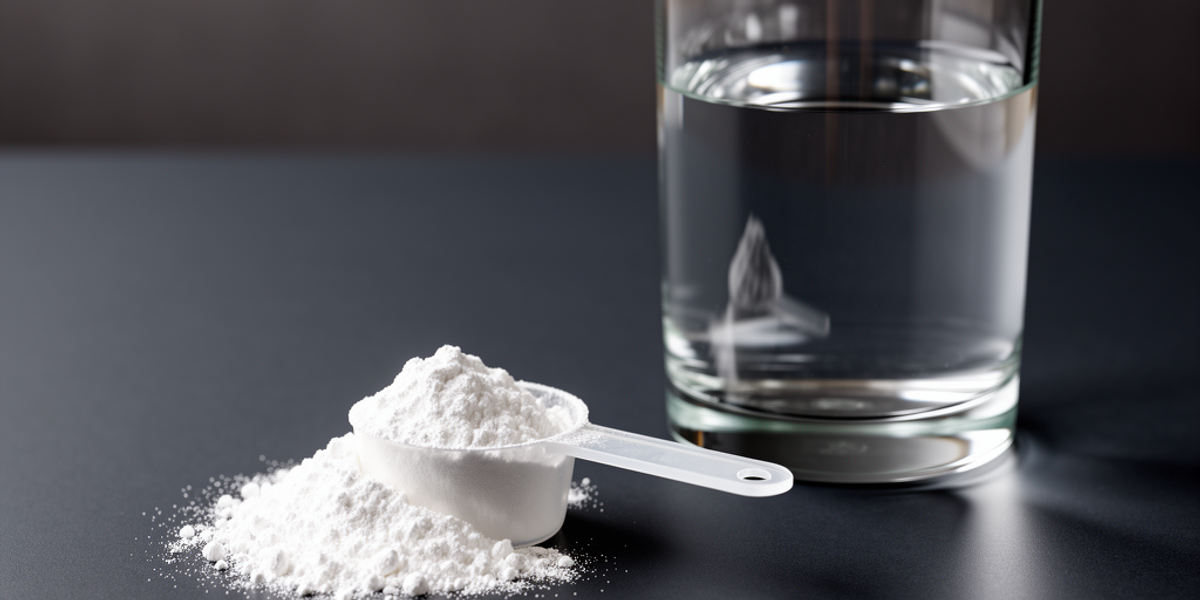
Buy Creatine Monohydrate. It is the exact form used in 99% of the clinical studies. It boasts a nearly 100% absorption rate in the human body. A six-month supply of high-quality creatine monohydrate should cost you no more than $30 to $40. If you are paying more than that, you are being scammed. Buy it in bulk powder form. Unflavored is best because you can throw it into any liquid.
The Dosage
Take 5 grams per day. That is it. One standard teaspoon.
You need to take it every single day, regardless of whether you are training or resting. Creatine does not work acutely like caffeine; it works through saturation. You are topping off your muscular reservoirs. If you skip days, those reservoirs deplete.
The Loading Phase Myth
If you read the back of a creatine tub, it will likely tell you to "load" by taking 20 grams a day for the first five to seven days.
You do not need to do this.
The loading phase is a tactic to get you to consume the product faster so you have to buy another tub sooner. While taking 20g a day will saturate your muscles in about a week, it also frequently causes gastrointestinal distress (read: severe stomach cramps and living on the toilet).
Instead, just take 5 grams a day. Your muscles will reach full saturation in about three to four weeks, and you will experience zero stomach issues. Be patient. Play the long game.
The Timing
Does it matter when you take it? No.
Some hyper-optimized studies suggest a slight benefit to taking it post-workout with carbohydrates, but the difference is so negligible it is not worth stressing over. The best time to take creatine is whenever you will consistently remember to take it. Put it in your morning coffee, mix it with your protein shake, or stir it into a glass of water before bed. Just get the 5 grams into your system.
Addressing the Myths and Safety Profile
Whenever something works well, rumors begin to circulate. Creatine has been the victim of decades of gym-bro mythology and uninformed medical anxiety. Let’s dismantle the nonsense.
Myth 1: "Creatine destroys your kidneys."
This is the most persistent myth, and it stems from a fundamental misunderstanding of blood work. When your body processes creatine, it produces a waste product called creatinine, which is filtered by your kidneys. If you take creatine, your creatinine levels will naturally rise.
Doctors often use elevated creatinine as a marker for kidney dysfunction. However, in the case of a lifting athlete taking creatine, elevated creatinine is simply a reflection of increased muscle mass and supplement intake, not kidney damage. Decades of long-term studies have definitively proven that creatine has zero adverse effects on kidney or liver function in healthy individuals.
Myth 2: "Creatine makes you bald."
This fear originates from a single 2009 study on rugby players which showed that creatine increased levels of DHT (dihydrotestosterone), a hormone linked to male pattern baldness.
Here is the reality: That study has never been successfully replicated. Furthermore, creatine has never been shown to directly cause hair loss. If you are genetically predisposed to male pattern baldness, you are going to lose your hair anyway. Creatine is not going to suddenly make your hair fall out. The scientific consensus currently states there is no compelling evidence linking creatine to baldness.
Myth 3: "Creatine makes you bloated and fat."
Creatine does cause water retention, but it is intracellular water retention, not subcutaneous water retention. Subcutaneous water sits under the skin and makes you look soft and puffy. Intracellular water sits inside the muscle cell and makes you look muscular, hard, and full. If you look fat while taking creatine, it is not the creatine. It is because you are eating too many calories and carrying too much body fat.
Why It Is the Only Supplement You Need
Self-improvement is about focusing on the highest-leverage actions.
If you want to build a formidable physique and a resilient mind, 95% of your results will come from eating whole foods, consuming 1 gram of protein per pound of body weight, sleeping 7 to 8 hours a night, and progressively overloading your lifts in the gym.
Supplements make up the final 5%. And of that 5%, creatine is doing almost all the heavy lifting.
Protein powder is convenient, but it is just food. You can get the exact same results from eating a steak or chicken breast. Pre-workout is just caffeine; you can drink a black coffee for a fraction of the price. Multivitamins are largely unnecessary if your diet is dialed in.
Creatine is different. To get the clinical dose of 5 grams of creatine from food, you would have to eat roughly 2.5 pounds of raw beef every single day. That is impractical, expensive, and terrible for your digestion. Supplementing is the only viable way to saturate your muscles and reap the benefits.
It is the cheapest, safest, and most effective legal performance enhancer on the planet.
Your Action Plan
Stop overcomplicating your fitness routine. Stop looking for magic pills and secret formulas. Stop giving your hard-earned money to supplement companies that view you as a walking ATM.
Here is your challenge for today:
- Go to your pantry and throw out the test boosters, the overpriced BCAAs, and the proprietary blend pre-workouts.
- Buy a bag of plain, unflavored Creatine Monohydrate.
- Take 5 grams today with a glass of water.
- Take 5 grams tomorrow, and every day after that.
- Go to the gym, put more weight on the bar than you did last week, and do the work.
Self-improvement requires action, consistency, and focusing on what is proven to work. The evidence for creatine is absolute. The rest is up to you.

Alex Rivera
Sports Nutritionist, CSCS
Certified sports nutritionist who cuts through supplement BS and diet fads. Alex writes about real food for real performance — no gimmicks.
View full profile →