How to Build a Non-Negotiable Daily Routine: The Blueprint for Relentless Consistency
Motivation is unreliable. To guarantee progress, you must establish non-negotiables—core habits executed regardless of mood, fatigue, or circumstance. Here is the exact protocol to build a bulletproof daily baseline.

Most men approach their daily routines completely backward. They read about the complex, 14-step morning routines of billionaire CEOs or elite athletes, try to replicate them, and fail within three days.
They fail because they attempt to build a skyscraper on a foundation of sand. They are designing routines for their best days—days when they wake up fully rested, highly motivated, and completely unbothered by external stress.
But life does not happen on your best days. Life happens on the days you sleep poorly, when work is a chaotic mess, and when your motivation is absolutely zero. If your routine requires you to feel good to execute it, it is not a routine. It is a hobby.
To build relentless consistency, you do not need a longer to-do list or more motivational videos. You need non-negotiables.
A non-negotiable is exactly what it sounds like: a daily action you take regardless of your mood, your schedule, or your circumstances. It is a baseline standard of behavior that you refuse to drop below. It is the architectural bedrock of your discipline.
Here is how to identify your core non-negotiables and build a daily routine that is entirely bulletproof.
The Psychology of the Baseline
Before you build your routine, you must understand why you are currently failing. The answer usually comes down to decision fatigue.
Research by social psychologist Roy Baumeister has repeatedly demonstrated that willpower is a finite resource. Every time you negotiate with yourself—Should I hit snooze? Should I go to the gym now or later? Should I eat this or that?—you are burning cognitive fuel. By the time 5:00 PM rolls around, your prefrontal cortex is exhausted, and you default to the path of least resistance: junk food, screens, and lethargy.
Non-negotiables eliminate the negotiation. You bypass the prefrontal cortex entirely. You do not decide whether or not you are going to the gym, just like you do not decide whether or not you are going to brush your teeth. The decision was made weeks ago.
Furthermore, a study published in the European Journal of Social Psychology by Dr. Phillippa Lally found that it takes an average of 66 days for a new behavior to become automatic. During those 66 days, relying on motivation is a guaranteed failure. You must rely on a rigid, predetermined system.
Phase 1: Identify Your Core Non-Negotiables
The most common mistake is selecting too many non-negotiables. If everything is important, nothing is important. If you have ten non-negotiables, you have none.
You need a maximum of three to four. They should cover the fundamental pillars of a high-functioning man: Physical Resilience, Cognitive Clarity, and Forward Momentum.
1. Physical Resilience
Your mind is housed in your body. If your body is weak, lethargic, or inflamed, your output will reflect that. You need a daily physical non-negotiable.
Examples:
- Move heavy weight or engage in intense cardiovascular training for a minimum of 45 minutes.
- Hit 10,000 steps, regardless of the weather.
- Drink 1 gallon of water.
- Zero alcohol consumption on weekdays.
2. Cognitive Clarity
Your attention is the most valuable currency you possess. Modern society is designed to fracture it. You must have a daily practice that forces you to reclaim your focus and ground your mind.
Examples:
- Read 15 pages of a non-fiction book.
- No screens for the first 60 minutes after waking.
- Write out your daily plan the night before.
- 10 minutes of silent, unstructured thinking or meditation.
3. Forward Momentum
This is the needle-mover. What is the one daily action that forces you to make progress in your career, your business, or your primary mission?
Examples:
- 90 minutes of uninterrupted "Deep Work" before checking email.
- Send 10 cold outreach emails for your business.
- Spend 30 minutes studying a high-income skill.
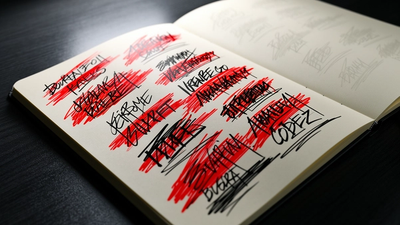
Action Step: Choose exactly three non-negotiables right now. Write them down. Keep them simple, measurable, and entirely within your control. "Make a sale" is not a non-negotiable because the client can say no. "Make 20 sales calls" is a non-negotiable because you control the phone.
Phase 2: The Minimum Effective Dose (MED)
This is where the magic happens. This is the secret to making your routine bulletproof.
Life is going to throw you curveballs. You will have to travel. You will get sick. You will have days where you are stuck in the office until 9:00 PM. On these days, executing your standard non-negotiables might be physically impossible.
The amateur looks at a 9:00 PM finish at the office, realizes he cannot do his 60-minute gym session, and decides to do nothing. He breaks his streak. He loses momentum.
The professional utilizes the Minimum Effective Dose (MED).
The MED is the absolute bare minimum action required to keep the habit alive and reinforce your identity as a man who does what he says he will do. It is your contingency plan.
For every non-negotiable you selected in Phase 1, you must define its MED.
- Standard Non-Negotiable: 60-minute heavy lifting session at the gym.
- MED: 100 pushups and 100 bodyweight squats in your living room before you get in the shower.
- Standard Non-Negotiable: Read 15 pages of a book.
- MED: Read 2 pages before your head hits the pillow.
- Standard Non-Negotiable: 90 minutes of Deep Work.
- MED: 15 minutes of organizing your workspace and outlining the exact tasks for tomorrow.
When you utilize the MED, you are not getting the full physical or productive benefits of the primary habit. But you are getting something much more important: you are preserving the psychological habit loop. You are proving to yourself that your word is law.
Phase 3: Implementation Intentions (If-Then Planning)
Motivation relies on willpower. Systems rely on triggers.
Psychologist Peter Gollwitzer pioneered the concept of "Implementation Intentions." His research shows that people who explicitly state when and where they will execute a behavior are up to three times more likely to follow through.
You cannot just say, "I will work out today." You must create an "If-Then" parameter.
- If my feet hit the floor in the morning, Then I immediately drink 16 ounces of water.
- If I finish my morning coffee, Then I put my phone in another room and begin my 90-minute deep work block.
- If it is 9:00 PM, Then I turn off all screens and read my 15 pages.
Tie your new non-negotiables to habits you already perform automatically. This is called habit stacking. If you already brush your teeth every morning without fail, anchor a new non-negotiable directly to that action.
The "Never Miss Twice" Rule
You are human. Despite your best efforts, you might miss a day. A true emergency happens, you end up in the hospital, or a crisis requires 100% of your attention.
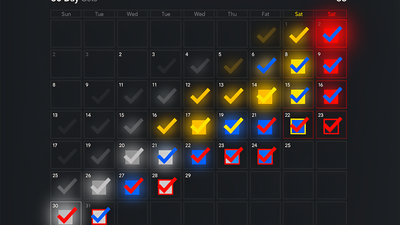
Missing one day is a statistical anomaly. Missing two days is the beginning of a new habit.
Adopt the "Never Miss Twice" rule immediately. If you fail to hit your non-negotiable (and even fail to hit your MED), you do not wallow in guilt. You do not wait until next Monday to start again. You simply acknowledge the failure, course-correct, and ensure that the next day's execution is flawless.
Perfectionism is the enemy of consistency. Men who demand perfection from themselves crumble the moment their streak is broken. Men who demand consistency simply get back to work the next day.
The Protocol: Steps to Take TODAY
You have the theory. Now you need the execution. Do not read this and move on to the next article. Take out a pen and paper, or open a blank document, and build your system right now.
Step 1: The Audit Look at your current daily routine. What are you doing out of habit that is actively destroying your momentum? Hitting snooze? Scrolling social media in bed? Identify the friction points.
Step 2: The Selection Write down your three non-negotiables.
- One for your physical health.
- One for your mental clarity.
- One for your mission/wealth.
Step 3: The MED Definition Next to each of those three items, write down the Minimum Effective Dose. What is the 5-minute version of this habit that you will execute on your absolute worst, busiest days?
Step 4: The Anchor Write down the exact time and place you will execute these habits. Use the "If-Then" framework.
Your 72-Hour Challenge
Ideas mean nothing without execution. Your challenge is to execute your three non-negotiables for the next 72 hours without fail.
Do not worry about next month. Do not worry about the rest of the year. Shrink your timeline. Can you hold the line for three days?
Treat these non-negotiables as if they were meetings with a high-paying client. You would not cancel on them because you "didn't feel like it." Stop canceling on yourself.
Build the baseline. Execute the protocol. Let the results speak for themselves.

Marcus Reid
Discipline Coach & Former Army Ranger
Former Army Ranger turned discipline coach. Marcus writes about mental toughness, habit systems, and building the kind of resilience that doesn't break under pressure.
View full profile →