Post-Workout Nutrition: The Reality of the Anabolic Window and What to Actually Eat
Stop sprinting to your locker for a protein shake. Here is the no-BS truth about the anabolic window, muscle protein synthesis, and the exact post-workout nutrition protocols you need to recover and grow.
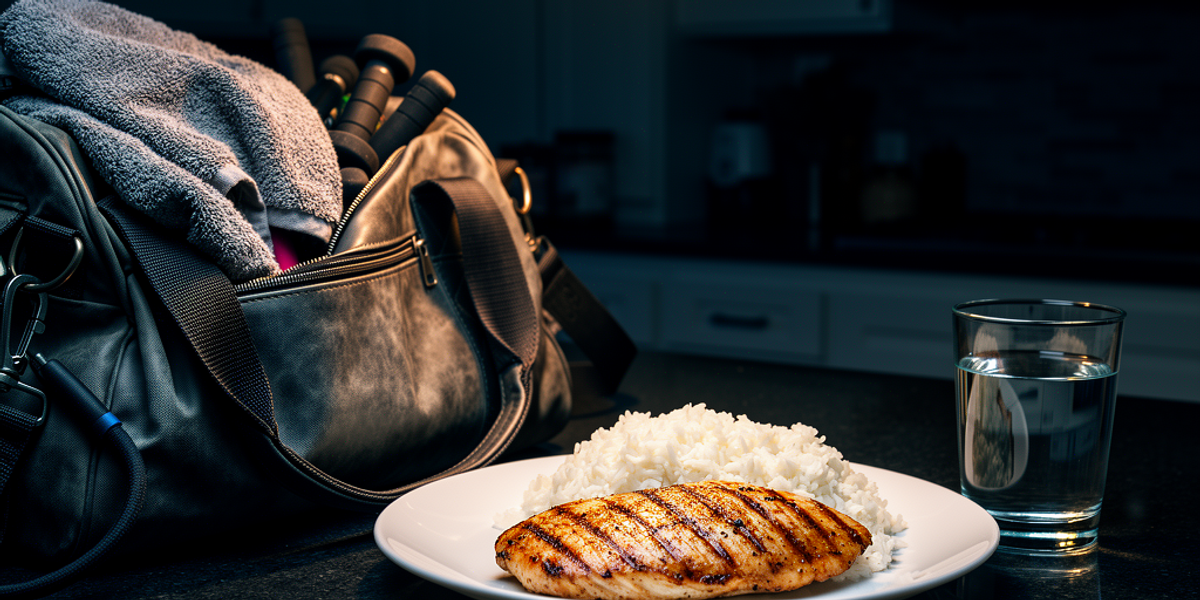
You know the scene. A guy finishes his last set of curls, drops the dumbbells, and immediately sprints to his locker. He furiously shakes a plastic bottle of whey protein and chugs it while still sweating. He believes that if he doesn't get protein into his system within thirty minutes of his last rep, his workout was a waste. His muscles will go catabolic. His gains will vanish.
This is the myth of the anabolic window. It is a persistent piece of gym lore born from supplement marketing in the 1990s, designed to sell you highly processed powders.
If you are serious about building your physique, improving your performance, and optimizing your recovery, you need to stop acting on outdated bro-science. You need to understand how your body actually processes nutrients, repairs tissue, and builds muscle.
Let's clear the air. Here is the truth about post-workout nutrition, the physiology of muscle growth, and the exact protocols you should follow to fuel your body.
The Anabolic Window: Myth vs. Reality
The traditional concept of the "anabolic window" suggests you have a narrow 30-to-45-minute timeframe post-training where your muscles are primed to absorb nutrients. Miss it, and you miss the opportunity for growth.
Science paints a very different picture.
When you lift weights, you create micro-tears in your muscle fibers. This triggers a biological process called muscle protein synthesis (MPS), which is your body's mechanism for repairing and building new muscle tissue. Research, heavily pioneered by experts like Dr. Brad Schoenfeld, shows that resistance training elevates MPS for 24 to 48 hours after your workout.
Your anabolic window is not a peephole; it is a barn door.
If you eat a pre-workout meal containing protein and carbohydrates an hour or two before you train, those nutrients are still being digested and absorbed while you lift, and long after you finish. Your blood amino acid levels are already elevated. Chugging a shake the second you finish your last set provides zero additional benefit because your body is already supplied with the building blocks it needs.
There is exactly one exception to this rule: fasted training. If you wake up at 5:00 AM, drink black coffee, and train on an empty stomach, your body is in a net negative protein balance. In this specific scenario, the anabolic window is real. You should consume high-quality protein and carbohydrates as soon as reasonably possible after your session to halt muscle breakdown.
For everyone else who eats a meal before they train, the timing of your post-workout meal is a matter of convenience, not an emergency. You have a generous 4-to-6-hour window surrounding your workout (including the pre-workout meal) to get your nutrition in.
Protein: The Building Blocks of Recovery
Protein is non-negotiable. It provides the essential amino acids required to repair the damage you inflicted on your muscles in the gym. But how much do you actually need, and what kind should it be?
To maximize muscle protein synthesis in a single meal, you need to hit a specific threshold of an amino acid called leucine. Leucine is the biological trigger that activates the mTOR pathway—the primary driver of muscle growth in the human body.
To flip the mTOR switch, you need approximately 2.5 to 3 grams of leucine.
To get this amount, you need to consume roughly 0.4 to 0.5 grams of high-quality protein per kilogram of your body weight. For a 180-pound (82 kg) man, this translates to roughly 35 to 40 grams of protein in your post-workout meal.
More is not necessarily better for a single sitting. Eating 80 grams of protein post-workout will not build twice as much muscle as eating 40 grams. Once the mTOR pathway is activated and MPS is maximized, the "muscle full effect" takes over. The excess protein is simply oxidized for energy or used for other bodily functions.
Your focus must be on your total daily protein intake. Aim for 1.6 to 2.2 grams of protein per kilogram of body weight per day (roughly 0.75 to 1 gram per pound). If you hit this daily target, the exact timing of your post-workout protein becomes a minor detail.
Carbohydrates: Replenishing the Fuel
For years, bodybuilders preached the necessity of consuming fast-digesting carbohydrates (like dextrose or gummy bears) immediately post-workout. The logic was twofold: replenish depleted glycogen stores and aggressively spike insulin, an anabolic hormone that supposedly shuttles nutrients into the muscle.
Here is the reality check: a standard 60-to-90-minute weightlifting session only depletes your muscle glycogen stores by about 30 to 40 percent. You are not running a marathon; you are lifting heavy things and resting for two minutes between sets. You do not need an emergency influx of sugar to survive.
Furthermore, while insulin does have anti-catabolic properties (it prevents muscle breakdown), research shows that a standard dose of protein (like 30-40g of whey or meat) raises insulin enough to maximize this effect. You do not need to purposefully spike your insulin with pure sugar to build muscle.
Does this mean you should avoid carbs post-workout? Absolutely not. Carbohydrates are vital for recovery, immune function, and fueling your next training session.
If you are training the same muscle group twice in one day (e.g., CrossFit competitors or combat athletes), rapid glycogen replenishment is critical. You should consume 1 to 1.5 grams of carbohydrates per kilogram of body weight immediately after your first session.
However, if you are like most men and train a muscle group once every few days, your body has 48 to 72 hours to refill its glycogen stores. As long as you eat enough total carbohydrates over the course of the day, your glycogen will be fully restored before your next workout.
Focus on complex, nutrient-dense carbohydrates in your post-workout meal: white or brown rice, sweet potatoes, oats, or quinoa. These provide sustained energy and essential micronutrients without the crash associated with simple sugars.
Fats: The Misunderstood Macronutrient
The old-school rule was to avoid dietary fat in your post-workout meal because it slows down digestion. The fear was that fat would delay the delivery of protein and carbs to your starving muscles.
It is true that fat delays gastric emptying. But as we have already established, the rapid delivery of nutrients is not the critical factor we once thought it was.
Studies have shown that consuming whole milk (which contains fat) post-workout actually promotes greater muscle protein synthesis than skim milk. The exact mechanism isn't perfectly understood, but it suggests that the natural matrix of whole foods—including their fat content—plays a beneficial role in recovery.
Don't go out of your way to eat a stick of butter post-workout, but do not fear the naturally occurring fats in a steak, whole eggs, or a drizzle of olive oil on your vegetables. A moderate amount of fat (10 to 20 grams) in your post-workout meal is perfectly fine and will not hinder your gains.
The Meal vs. The Shake
Supplements are exactly that: supplementary. Whey protein is a fantastic tool for convenience. If you have a long commute after the gym or you simply cannot stomach solid food immediately after a grueling leg day, drink a shake.
But whenever possible, prioritize a whole-food meal over a liquid shake.
Why? Because building a formidable physique and optimizing your hormones requires more than just macros. It requires micronutrients.
Beef provides zinc, iron, and B12—essential for testosterone production and energy metabolism. Potatoes and spinach provide potassium and magnesium—critical for muscle contraction and central nervous system recovery. A shake gives you isolated amino acids; a meal gives you a complex matrix of vitamins, minerals, and enzymes that your body needs to operate at peak capacity.
Furthermore, whole foods provide satiety. If you are cutting body fat, drinking 300 calories of liquid whey and maltodextrin will leave you starving an hour later. Eating 300 calories of chicken breast and broccoli will keep you full and compliant with your diet.
Treat your body like a high-performance machine. Give it premium, unprocessed raw materials.
Practical Post-Workout Protocols
Theory is useless without application. Here is exactly how you should structure your post-workout nutrition based on your specific training scenario.
Scenario A: The Fasted Lifter
- Context: You train first thing in the morning on an empty stomach.
- Urgency: High. Your body is in a catabolic state.
- Protocol: Consume your post-workout nutrition within 60 minutes of finishing your session.
- The Fix: If you have time, eat a robust breakfast. 4-5 whole eggs, a bowl of oatmeal, and a piece of fruit. If you are rushing to the office, drink a shake containing 40g of whey protein and eat a banana or a bagel on your commute.
Scenario B: The Fed Lifter
- Context: You ate a balanced meal containing protein and carbs 1 to 3 hours before training.
- Urgency: Low. Your blood is still rich with amino acids and glucose.
- Protocol: Eat your next solid meal whenever you are naturally hungry, ideally within 2 to 3 hours after your workout.
- The Fix: A standard, balanced meal. 8 ounces of lean steak or chicken, 1.5 cups of rice or potatoes, and a serving of vegetables. Aim for roughly 40-50g of protein and 50-75g of carbohydrates.
Scenario C: The Two-A-Day Athlete
- Context: You lift weights in the morning and have a hard martial arts, sprinting, or sport-specific session in the evening.
- Urgency: High for carbohydrates, moderate for protein.
- Protocol: You need rapid glycogen resynthesis.
- The Fix: Immediately post-workout, consume a liquid shake with 30g of whey protein and 50-60g of easily digestible carbohydrates (like highly branched cyclic dextrin, or simply blend a large banana and some honey into your shake). Follow this up with a solid meal 2 hours later.
Your Action Plan
Stop overcomplicating your nutrition with arbitrary, stressful time limits. The hierarchy of nutritional importance for muscle growth and recovery is simple:
- Total daily caloric intake (are you eating enough to grow?).
- Total daily protein intake (are you hitting 0.8g - 1g per pound of body weight?).
- Total daily carbohydrate and fat intake.
- Nutrient timing (the least important factor).
If you are failing at steps one and two, stressing over exactly when you drink your protein shake is like worrying about the paint job on a car that doesn't have an engine.
Here is your challenge for the next seven days: Ditch the immediate post-workout shake. Stop carrying your blender bottle around the gym floor.
Train hard, go home, take a shower, and cook a real meal. Put 8 ounces of animal protein, a cup of rice, and some vegetables on a plate. Eat it within two hours of your training session.
Watch what happens. You will not lose a single ounce of muscle. You will recover just as well, you will feel more satiated, and you will finally break free from the marketing myths that have dictated your gym routine for years.
Take control of your nutrition. Eat like an adult. Do the work.

Alex Rivera
Sports Nutritionist, CSCS
Certified sports nutritionist who cuts through supplement BS and diet fads. Alex writes about real food for real performance — no gimmicks.
View full profile →