Protein: The No-BS Guide to How Much You Need and Where to Get It
Stop overcomplicating your nutrition. Here is the exact science on how much protein you need to build muscle, the best sources to eat, and a practical protocol you can start today.
You are overcomplicating protein.
If you spend more than five minutes scrolling fitness forums trying to find the "optimal" amino acid profile or stressing over exactly when to drink your post-workout shake, you are majoring in the minors. The fitness industry thrives on making simple concepts complex so they can sell you the antidote.
Let's cut through the noise.
Protein is the foundational building block of muscle tissue, hormones, and enzymes. If you want to build a physique that commands respect, recover faster, and drop body fat without losing muscle, you have to get your protein intake right. It is non-negotiable. But getting it right doesn't require a PhD in nutritional biochemistry.
Here is the unvarnished truth about how much protein you actually need, where you should get it, and how to structure your intake. No fluff, no bro-science. Just the numbers and protocols you need to execute.
The Golden Rule: How Much Protein Do You Actually Need?
For decades, bodybuilders preached an arbitrary rule of 1.5 to 2 grams of protein per pound of body weight. Unless you are heavily enhanced by pharmaceuticals, eating that much protein is just a highly expensive way to create expensive urine.
On the other end of the spectrum, the government's Recommended Dietary Allowance (RDA) sits at a measly 0.36 grams per pound. That number is the bare minimum required to prevent malnutrition. You are not reading this to survive; you are reading this to optimize and grow.
Here is the actual science: Aim for 0.7 to 1 gram of protein per pound of body weight.
A massive 2018 meta-analysis published in the British Journal of Sports Medicine reviewed 49 studies and found that muscle protein synthesis (the process of building muscle) maxes out at roughly 0.73 grams per pound of body weight (1.6g/kg) for the vast majority of people.
So why push it to 1 gram per pound? Three reasons:
- Simplicity: The math is incredibly easy. If you weigh 180 pounds, you eat 180 grams of protein.
- Satiety: Protein is the most highly satiating macronutrient. If you are cutting (eating in a caloric deficit to lose fat), a higher protein intake keeps you from feeling like you are starving.
- Thermic Effect of Food (TEF): Your body burns calories just breaking down food. The TEF for protein is 20-30%, compared to 5-10% for carbs and 0-3% for fats. Eating more protein inherently ramps up your metabolism.
The Exception: If you are significantly overweight (e.g., over 25% body fat), do not use your total body weight. Eating 300 grams of protein because you weigh 300 pounds is unnecessary and difficult. Instead, calculate your protein based on your target body weight or your lean body mass. If you weigh 250 pounds but your goal weight is 190, aim for 190 grams of protein.
Complete vs. Incomplete Proteins: The Leucine Factor
Not all protein is created equal, but you don't need to overthink this either.
Protein is made up of amino acids. There are 20 amino acids in total, and 9 of them are "essential"—meaning your body cannot produce them on its own. You must get them from your diet.
A complete protein contains all 9 essential amino acids in adequate amounts. An incomplete protein is missing one or more of these essential amino acids, or contains them in very low quantities.
When it comes to building muscle, the most critical amino acid is Leucine. Leucine acts like the key that turns on the ignition of a car; it triggers the biological pathway (mTOR) that initiates muscle protein synthesis. To fully stimulate muscle growth, you need about 2.5 to 3 grams of leucine per meal.
Animal proteins (meat, eggs, dairy) are complete proteins and are naturally high in leucine. Plant proteins (beans, rice, lentils) are often incomplete and have lower leucine content.
Does this mean vegans can't build muscle? No. It just means they have to work harder. If you rely on plant-based proteins, you need to eat a larger total volume of protein and combine different sources (like rice and beans) to get a complete amino acid profile.
But if you eat meat, you can completely ignore the "complete vs. incomplete" debate. Just eat high-quality animal products, and the amino acids will take care of themselves.
The Best Sources of Protein (Ranked)
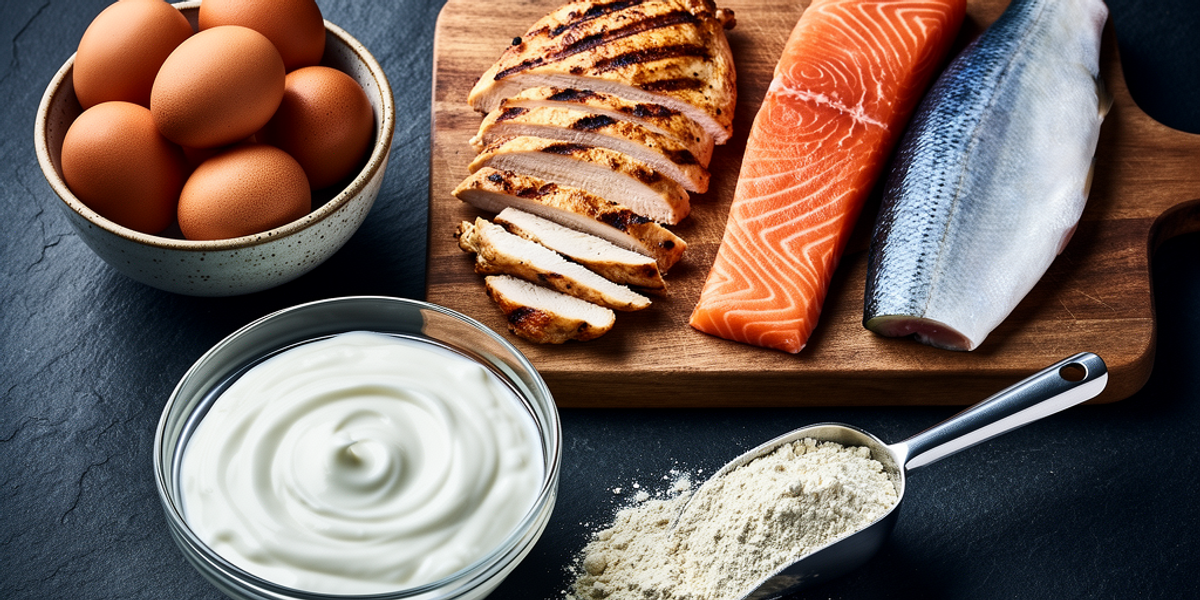
Stop relying on protein bars loaded with sugar alcohols and processed garbage. Get your protein from whole foods. Here is the tier list of the best sources based on bioavailability, micronutrient density, and amino acid profiles.
Tier 1: The Heavy Hitters (Animal Proteins)
These should make up the bulk of your diet. They are highly bioavailable and packed with essential nutrients like iron, zinc, and B-vitamins.
- Lean Beef (Steak, 93/7 Ground Beef): The king of muscle-building foods. Packed with creatine, iron, and high-quality protein. (Approx. 25g protein per 4oz)
- Chicken Breast/Thighs: The classic staple. Cheap, versatile, and almost pure protein if you eat the breast. (Approx. 31g protein per 4oz)
- Whole Eggs: Nature's multivitamin. Do not throw away the yolks—that is where the testosterone-supporting cholesterol and vitamins live. (Approx. 6g protein per egg)
- Fish (Salmon, Tuna, Cod): Excellent protein sources. Salmon provides crucial Omega-3 fatty acids for joint and brain health. (Approx. 25g protein per 4oz)
Tier 2: Dairy
Dairy is an elite protein source because it primarily consists of casein and whey, both of which are phenomenal for muscle growth.
- Greek Yogurt (Plain): A massive cheat code. It is thick, filling, and packs a huge punch. (Approx. 15-20g protein per 6oz)
- Cottage Cheese: Slow-digesting casein protein, making it great for a late-night snack to keep amino acids dripping into your system while you sleep. (Approx. 14g protein per 0.5 cup)
- Milk (Fairlife or Raw): Ultra-filtered milk like Fairlife has more protein and less sugar than standard milk.
Tier 3: Plant Sources
Use these as secondary sources to top off your macros, not as the foundation (unless you are strictly plant-based).
- Lentils and Black Beans: Great for fiber and complex carbs, but you have to eat a large volume to hit high protein numbers. (Approx. 9g protein per 0.5 cup cooked)
- Edamame/Tofu: The best plant-based options for a complete amino acid profile.
Protein Timing: Killing the Anabolic Window Myth
You just finished a heavy set of squats. Do you need to sprint to the locker room and chug a protein shake within 30 minutes before your muscles shrivel up?
No. The "anabolic window" is largely a myth pushed by supplement companies in the early 2000s to sell more whey powder.
Research clearly shows that your total daily protein intake is vastly more important than the exact timing of when you eat it. As long as you hit your daily macro target, you will grow. Muscle protein synthesis remains elevated for 24 to 48 hours after a hard resistance training session.
However, if you want to move from "good enough" to "optimal," timing does play a small role.
Your body does not store protein like it stores fat or carbohydrates. You cannot eat 150 grams of protein in one sitting and expect your body to utilize all of it for muscle building over the next 24 hours. Muscle protein synthesis has a refractory period—it spikes when you eat a protein-rich meal, and then it drops back down to baseline after a few hours.
The Optimal Protocol: To maximize growth, split your total daily protein intake into 3 to 5 meals, spaced roughly 3 to 5 hours apart. Aim for a minimum of 30 to 40 grams of high-quality protein per meal.
If your goal is 160 grams a day, that looks like four meals of 40 grams. This ensures you are constantly spiking muscle protein synthesis throughout the day.
Are Protein Shakes Actually Worth It?
Let's get one thing straight: Protein powder is a supplement. It is designed to supplement a solid diet, not replace it. There is nothing magical about whey protein that will build more muscle than a chicken breast.
That said, protein powder is an incredibly useful tool for two reasons: convenience and cost.
Trying to eat 180 grams of protein purely from chicken and steak can feel like a chore, especially if you have a busy career or a demanding schedule. A scoop of whey isolate mixed with water gives you 25 grams of highly bioavailable protein in 10 seconds.
Which type should you buy?
- Whey Isolate: The purest form. Fast digesting, very low in lactose, carbs, and fats. Best for post-workout or general use.
- Whey Concentrate: Cheaper, but contains more lactose and fats. If you have a strong stomach and are on a budget, it works fine.
- Casein: Slow-digesting. Good for baking or taking before bed, but not necessary for most guys.
Keep it to 1 to 2 scoops a day maximum. Get the rest of your protein from chewing real food.
Your Protocol: What to Do Today
Knowledge without execution is just intellectual entertainment. You are reading this to get results. Here is your step-by-step protocol to lock in your protein intake starting today.
Step 1: Calculate Your Target Take your current body weight (or target body weight if you are overweight) and multiply it by 1. That is your daily protein goal in grams. Write that number down right now.
Step 2: Divide and Conquer Divide that number by 4. This is your per-meal target. If your goal is 180g, you need 45g of protein across four meals.
Step 3: Build Your Arsenal Go to the grocery store today and buy your staples. Do not leave it to chance. Buy eggs, Greek yogurt, chicken breast, and lean ground beef. If you don't have a high-quality whey isolate, order one.
Step 4: Track It For the next 7 days, track your food using an app like MacroFactor, MyFitnessPal, or Cronometer. Most men vastly overestimate how much protein they eat. You need the cold, hard data to calibrate your habits.
The Challenge
I am challenging you to hit your exact protein target every single day for the next 14 days. No excuses, no missed days.
You will notice three things happen: your recovery will accelerate, your cravings for junk food will plummet because you'll be full, and your muscles will feel harder and more dense.
Stop guessing. Stop buying into the hype. Calculate your number, buy the food, eat the food, and do the work in the gym. The results will follow.

Alex Rivera
Sports Nutritionist, CSCS
Certified sports nutritionist who cuts through supplement BS and diet fads. Alex writes about real food for real performance — no gimmicks.
View full profile →