Sugar Is Sabotaging Your Performance: A Tactical Guide to Cutting It
Excess sugar destroys your focus, tanks your testosterone, and ruins your sleep. Here is a realistic, step-by-step protocol to cut the junk, reclaim your energy, and optimize your physical and cognitive performance without going cold turkey.
You track your macros. You lift heavy. You optimize your sleep schedule and listen to podcasts about productivity. But if you are still consuming a standard, sugar-heavy diet, you are driving a sports car with the parking brake on.
Most men view sugar through a single, narrow lens: body fat. They think that as long as they are burning off the calories in the gym, a few sodas or a sleeve of cookies won't matter. This is a fundamental misunderstanding of human physiology.
Sugar is not just empty calories. In excess, it is an active antagonist to your physical and cognitive performance. It blunts your edge, creates volatile energy swings, disrupts your hormonal baseline, and extends your recovery times. If you want to operate at your peak—whether in the boardroom, the gym, or your personal life—you have to get your blood glucose under control.
Here is the reality of how excess sugar is sabotaging your performance, followed by a realistic, tactical protocol to cut it out without relying on sheer willpower.
The Physiology of the Crash: Destroying Your Focus
Let's start with your daily energy and cognitive output. When you consume a high amount of refined sugar or simple carbohydrates, your blood glucose levels skyrocket. Your pancreas responds to this emergency by dumping a massive amount of insulin into your bloodstream to shuttle that glucose into your cells.
Because the spike was so aggressive, the insulin response is equally aggressive. This results in a rapid clearance of blood glucose, plunging you into a state of reactive hypoglycemia. You know this as "the crash."
This isn't just about feeling a little sleepy at 2:00 PM. From a cognitive standpoint, your executive function is temporarily crippled. Your brain relies on a steady stream of glucose to operate. When that supply drops off a cliff, your ability to do deep work, make complex decisions, and maintain emotional regulation vanishes. You become irritable, easily distracted, and desperate for another hit of caffeine or sugar to bring you back to baseline.
If you are relying on a cycle of sugar spikes and caffeine to get through your workday, you are operating at a fraction of your actual cognitive capacity.
The Silent Killer of Testosterone
This is the metric most men care about, and for good reason. Testosterone is the foundational hormone for male drive, muscle accretion, and vitality. And excess sugar is actively suppressing it.
The mechanism is straightforward. Chronically high sugar consumption leads to insulin resistance. When you are insulin resistant, your body has to pump out more and more insulin just to maintain normal blood sugar levels.
High systemic insulin directly suppresses the production of Sex Hormone-Binding Globulin (SHBG) in the liver. It also impairs the function of the Leydig cells in your testes, which are responsible for producing testosterone.
Furthermore, excess refined sugar is rapidly converted into triglycerides and stored as visceral fat (the hard belly fat that wraps around your organs). Visceral fat is not inert; it is an active endocrine organ that produces an enzyme called aromatase. Aromatase literally converts your hard-earned testosterone into estrogen.
If you want to optimize your hormone profile, you don't need a test-booster supplement. You need to drop your insulin levels.
Systemic Inflammation and Delayed Recovery
You crush a heavy leg day. You expect to be sore, but you also expect to recover within 48 to 72 hours. If your diet is packed with added sugars, you are artificially extending that recovery window.
Excess sugar consumption drives up systemic inflammation. It triggers the release of inflammatory cytokines and increases your levels of C-reactive protein (CRP), a primary biomarker for inflammation. Moreover, when excess sugar binds to proteins and lipids in your bloodstream, it forms compounds called Advanced Glycation End products (AGEs).
AGEs damage your collagen and elastin. They make your joints ache longer. They make your tendons stiffer and more prone to injury. If you constantly feel banged up, stiff, and slow to recover from your training sessions, your programming might not be the problem—your post-workout nutrition might be.
Wrecking Your Sleep Architecture
You already know sleep is the ultimate performance enhancer. But eating sugar, particularly in the hours before bed, destroys your sleep architecture.
A late-night sugar hit spikes your core body temperature and triggers a release of cortisol—your body's primary stress hormone—to manage the rapid fluctuations in blood sugar. Cortisol and melatonin possess an inverse relationship; when cortisol is high, melatonin is suppressed.
Even if you manage to fall asleep after eating a bowl of ice cream, the quality of that sleep is compromised. The nocturnal blood sugar crash will often pull you out of deep, slow-wave sleep (the phase where physical recovery and testosterone production peak) and into lighter stages of sleep. You wake up feeling like you didn't sleep at all, setting the stage for a day of intense sugar cravings as your body searches for quick energy.
The Tactical Reduction Protocol
Understanding the damage is step one. Step two is fixing it.
Going "zero sugar" overnight is a fool's errand. If you have been consuming 100 grams of added sugar a day for the last decade, going cold turkey will result in massive dopamine withdrawals, intense cravings, and inevitable failure. You need a phased, strategic approach.
The American Heart Association recommends men keep their added sugar intake under 36 grams per day. If you want to be elite, your target should be under 25 grams. Notice the word added. We are not talking about the naturally occurring fructose in a piece of whole fruit. We are talking about the sucrose and high-fructose corn syrup added to foods and drinks.
Here is your 21-day phased reduction plan.
Phase 1: Liquid Elimination (Days 1-7)
Liquid sugar is the most destructive form of carbohydrate. It bypasses the mechanical digestion of chewing and lacks any fiber to slow its absorption, resulting in the most violent insulin spikes possible.
For the first seven days, change nothing about your food, but ruthlessly eliminate all liquid calories.
- No soda.
- No sweet tea.
- No energy drinks with sugar.
- No fruit juices (juice is just sugar water with the fiber removed).
- No sugar in your coffee.
Replace these with water, black coffee, and unflavored sparkling water. If you need electrolytes, use a zero-sugar supplement. This single step usually eliminates 50% of a man's added sugar intake.
Phase 2: The High-Protein Breakfast (Days 8-14)
How you start your day dictates your blood sugar curve for the next 16 hours. If you eat a bowl of cereal, a bagel, or a sweetened protein bar for breakfast, you are getting on the blood sugar rollercoaster at 8:00 AM, and you will be fighting cravings all day.
For week two, mandate a minimum of 30 to 40 grams of high-quality protein within 60 minutes of waking up, accompanied by healthy fats.
- 4 whole eggs and a handful of spinach.
- A steak from the night before.
- Greek yogurt (unsweetened) with almonds.
Protein and fat provide a slow, steady release of energy. They keep your insulin baseline low and keep you satiated until lunch. You will be shocked at how your mid-morning cravings vanish when you fix your breakfast.
Phase 3: The 80/20 Rule for Hidden Sugars (Days 15-21)
By week three, your palate will begin to reset. Foods you used to love will start tasting sickeningly sweet. Now it is time to hunt down the hidden sugars in your pantry.
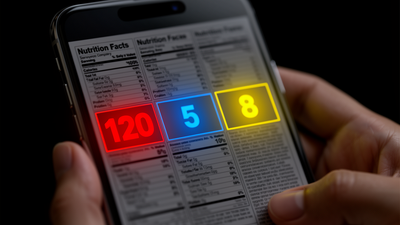
Start reading labels. Sugar is hiding in your BBQ sauce, your ketchup, your pasta sauce, and your "healthy" granola. The food industry uses over 60 different names for sugar (maltodextrin, dextrose, agave nectar, cane juice). If it ends in "-ose," it's sugar.
You don't need to be a monk. Use the 80/20 rule. 80% of your diet should consist of single-ingredient, whole foods (meat, eggs, vegetables, rice, potatoes, whole fruit). The remaining 20% gives you flexibility, but keep your total added sugar under that 25-gram daily threshold.
Managing the Withdrawals
During the first two weeks, your brain is going to fight you. Sugar triggers the exact same dopamine reward pathways in the brain as cocaine. When you cut it, you will experience cravings. Here is how you mitigate them:
1. Use the 10-Minute Walk: When a craving hits, or immediately after a meal, take a brisk 10-minute walk. Muscular contraction requires energy. Walking forces your muscles to pull glucose out of your bloodstream without requiring insulin. This blunts the blood sugar spike and crushes cravings.
2. Hydrate and Salt: Often, what you perceive as a sugar craving is actually mild dehydration or a lack of sodium. When you drop your carbohydrates, your body excretes water and sodium. Drink a large glass of water with a pinch of high-quality sea salt when a craving hits.
3. Supplement with Magnesium: Magnesium deficiency is incredibly common and is strongly linked to sugar cravings, particularly for chocolate. Supplementing with 400mg of Magnesium Glycinate in the evening will not only help curb these cravings but will also drastically improve your sleep quality.
The Challenge
Information without execution is just entertainment. You now know exactly how sugar is holding you back, and you have the blueprint to fix it.
Here is your challenge: Start Phase 1 today. Not on Monday. Not after your next grocery run. Today.
Commit to zero liquid sugar for the next 7 days. Track your energy levels at 2:00 PM. Track the quality of your sleep. Track your focus during deep work. The results will speak for themselves.
Take control of your physiology. Drop the sugar, reclaim your edge, and start operating at the level you were built for.

Alex Rivera
Sports Nutritionist, CSCS
Certified sports nutritionist who cuts through supplement BS and diet fads. Alex writes about real food for real performance — no gimmicks.
View full profile →