The Comfort Zone Is Where Ambition Goes to Die
Modern comfort is a trap that shrinks your brain and kills your drive. Learn the biology of willpower and how to systematically expand your discomfort tolerance using daily, calculated micro-challenges.

Look around you. Everything in the modern world is engineered to eliminate friction. You can summon high-calorie food to your door with a thumb swipe. You can manipulate the climate of your home to a perpetual 72 degrees. You can distract yourself from a single second of boredom with an endless feed of hyper-optimized content.
We have conquered survival, and in doing so, we have built a gilded cage.
Comfort is no longer a brief respite from the harsh realities of life; it has become the baseline. And this baseline is killing your ambition. When you exist in a state of perpetual comfort, your mind and body adapt to require less effort. You become fragile. The threshold for what you consider "hard" plummets. A delayed flight, a difficult conversation, or a challenging workout suddenly feels insurmountable.
If you are serious about self-improvement, you must understand a fundamental truth: the comfort zone is not a place of rest. It is a slow, painless death for your potential.
To build a life of consequence, you must stop viewing discomfort as a nuisance to be avoided and start treating it as a tool to be leveraged. You need to systematically expand your discomfort tolerance.
The Biology of Softness
This isn't just philosophical rhetoric; it is hard biological science.
Neuroscientists have identified a specific region in the brain called the anterior midcingulate cortex (aMCC). This area is heavily involved in willpower, tenacity, and the drive to do things you do not want to do.
Recent research reveals something fascinating about the aMCC: it acts like a muscle. When you force yourself to do something difficult—especially something you do not want to do—the aMCC physically grows. When you live a life of unchecked comfort and immediate gratification, it shrinks.
Think about the implications of that. Every time you hit the snooze button, choose the couch over the gym, or avoid a hard conversation, you are literally shrinking the part of your brain responsible for willpower. You are training yourself to be soft.
Furthermore, constant comfort destroys your dopamine baseline. Dr. Anna Lembke, a Stanford psychiatrist, outlines how pleasure and pain are processed in the same area of the brain, acting like a seesaw. When you constantly flood your brain with cheap, comfortable pleasure (junk food, doom-scrolling, porn, video games), the brain adapts by pushing down on the "pain" side to restore balance. This means that when the cheap pleasure wears off, your baseline drops. You feel anxious, unmotivated, and depressed.
The only way to reset this balance—to restore your natural drive and ambition—is to intentionally press down on the pain side of the seesaw. You must seek out friction.
The Principle of Hormesis
In biology, there is a concept called hormesis. It refers to a process where a low dose of a stressor or toxin, which would be lethal in high doses, actually provokes a highly beneficial, adaptive response in the organism.
Exercise is a perfect example of hormesis. You are literally tearing muscle fibers and stressing your cardiovascular system. In the short term, you are damaging yourself. But your body overcompensates during recovery, making you stronger and more resilient.
Your ambition and mental toughness work the exact same way. If you want to increase your capacity to handle the heavy burdens of leadership, business, and family life, you cannot wait for a crisis to test you. You must introduce controlled, deliberate stressors into your daily routine. You must engage in psychological hormesis.
The Strategy: Progressive Overload for the Mind
The mistake most men make when trying to break out of a rut is attempting a massive, reckless leap. They decide they are going to wake up at 4:00 AM, run ten miles, fast for 24 hours, and read a book a day. This lasts exactly 48 hours before their central nervous system rebels and they crash back into their comfort zone, feeling like a failure.
You do not build a 500-pound deadlift by walking into the gym on day one and loading up the bar. You build it through progressive overload—adding five pounds at a time, week after week.
You must apply this exact same principle to your discomfort tolerance. You need to introduce "micro-challenges." These are small, deliberate exposures to physical, mental, and social friction that incrementally stretch your comfort zone without breaking your psychology.
Here are the specific protocols you can implement immediately to start callousing your mind.
Protocol 1: Physical Discomfort
The body is the easiest access point to the mind. If you can command your physical vessel to endure stress, your mental resilience will follow.
The Cold Exposure Protocol
You don't need an expensive ice bath to get started. Use your shower. The goal is not just the physiological benefits of cold exposure (though the dopamine spike is well-documented); the goal is the psychological victory of stepping into something that sucks.
- The Action: End your daily shower with 60 seconds of purely cold water.
- The Rule: You cannot tense up, shiver violently, or hold your breath. The true challenge is to find the cold, accept it, and regulate your breathing. Breathe through your nose. Slow your heart rate. Command your body to be calm in the face of a stressor.
- The Progression: Add 15 seconds each week until you can easily stand under cold water for 3 minutes.
The 10% Rule in Training
Most guys stop lifting or running when it gets uncomfortable. That is exactly when the workout actually begins. Everything before that was just a warm-up.
- The Action: In your next workout, when your brain tells you that you are completely done and cannot do another rep or run another mile, push for 10% more.
- The Rule: If you are doing a set of pull-ups and your brain screams "drop" at 10 reps, do 11. If you are on the assault bike and want to quit at 15 minutes, go to 16:30.
- The Purpose: You are teaching your aMCC that the initial signal of fatigue is a suggestion, not a mandate. You always have more in the tank.
Fasting as a Discipline
Food is the ultimate modern comfort. We eat not because we are hungry, but because we are bored, stressed, or it simply happens to be noon.
- The Action: Implement a strict 16:8 intermittent fasting protocol, or commit to one 24-hour water fast per month.
- The Rule: When the hunger pangs hit, do not distract yourself. Sit with the sensation. Recognize that hunger is not an emergency. It is just a biological signal, and you are in control of whether or not you respond to it.
Protocol 2: Social and Mental Friction
Physical toughness is useless if you are socially and intellectually fragile. Expanding your comfort zone requires leaning into the interpersonal and cognitive stressors you habitually avoid.
The Hard Conversation Mandate
Men often avoid conflict under the guise of "keeping the peace." In reality, they are just avoiding the discomfort of confrontation. This leads to resentment, poor boundaries, and a loss of self-respect.
- The Action: Identify one conversation you have been putting off. It could be addressing a performance issue with a subordinate, setting a boundary with a family member, or clearing the air with a partner.
- The Rule: Execute the conversation within the next 24 hours. Do not text. Do it face-to-face or over the phone.
- The Protocol: State the facts clearly, strip out the emotion, and endure the awkward silence that follows. Do not rush to fill the silence or apologize for your boundaries. Sit in the discomfort of the tension.
Intellectual Humility (Be a Beginner)
As men get older, they stop doing things they aren't already good at. The ego hates the discomfort of incompetence. This halts your growth entirely.
- The Action: Commit to learning one skill where you are an absolute beginner and will look foolish.
- Examples: Join a Brazilian Jiu-Jitsu gym where you will get tapped out by people half your size. Take a public speaking class where you will stammer and sweat. Learn a new language and sound like an idiot trying to order a coffee.
- The Purpose: Stripping away your ego and sitting in the discomfort of incompetence builds profound self-assurance. When you no longer fear looking stupid, you become incredibly dangerous.
Digital Starvation
Your smartphone is a pacifier. You use it to soothe the micro-anxieties of daily life. Waiting in line? Phone. Elevator? Phone. Passenger seat? Phone.
- The Action: Institute a "Zero Input" protocol for 60 minutes a day.
- The Rule: No phone, no music, no podcasts, no books. Just you and your thoughts. Take a walk, or sit in a room.
- The Result: At first, your brain will panic. You will feel an intense itch to consume information. Deny it. Let the boredom wash over you. On the other side of that boredom is clarity, original thought, and a massive reduction in baseline anxiety.
The Friction Ledger
To make this systemic, you need to track it. What gets measured gets managed.
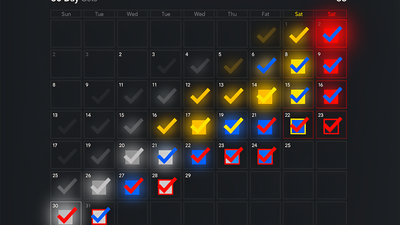
Create a "Friction Ledger" in your journal or on your phone. Every day, you must log at least one intentional act of discomfort. It doesn't have to be massive. It just has to be deliberate.
Monday: Took a 3-minute cold shower. Tuesday: Had the difficult feedback meeting with my vendor. Wednesday: Pushed for 2 extra reps on squats when I wanted to rack the bar. Thursday: Left my phone in the car during a 45-minute lunch.
Over time, you will notice a profound shift. The things that used to derail your day will barely register. The challenges that used to paralyze you with anxiety will be met with a calm, stoic resolve. You will have rewired your brain to understand that friction is not a threat; it is the terrain on which you operate.
The Final Challenge
Reading this article is comfortable. It gives you a quick hit of dopamine, making you feel productive because you consumed self-improvement content.
But consumption without execution is just another form of mental masturbation.
Here is your challenge: Do not close this tab and go about your normal, comfortable day. Pick exactly one protocol from the lists above.
Commit to it.
Execute it today. Not tomorrow. Not next Monday. Today.
Take the cold shower. Send the meeting invite for the hard conversation. Leave your phone in the other room for an hour.
Stop letting comfort dictate the trajectory of your life. Step into the friction, and take your ambition back.

Marcus Reid
Discipline Coach & Former Army Ranger
Former Army Ranger turned discipline coach. Marcus writes about mental toughness, habit systems, and building the kind of resilience that doesn't break under pressure.
View full profile →