The No-BS Guide to Eating for Performance
Forget fad diets and overcomplicated macros. Here is the unvarnished truth about eating for performance: protein, whole foods, and consistency. Learn the exact protocols to fuel your body, build muscle, and optimize your hormones.
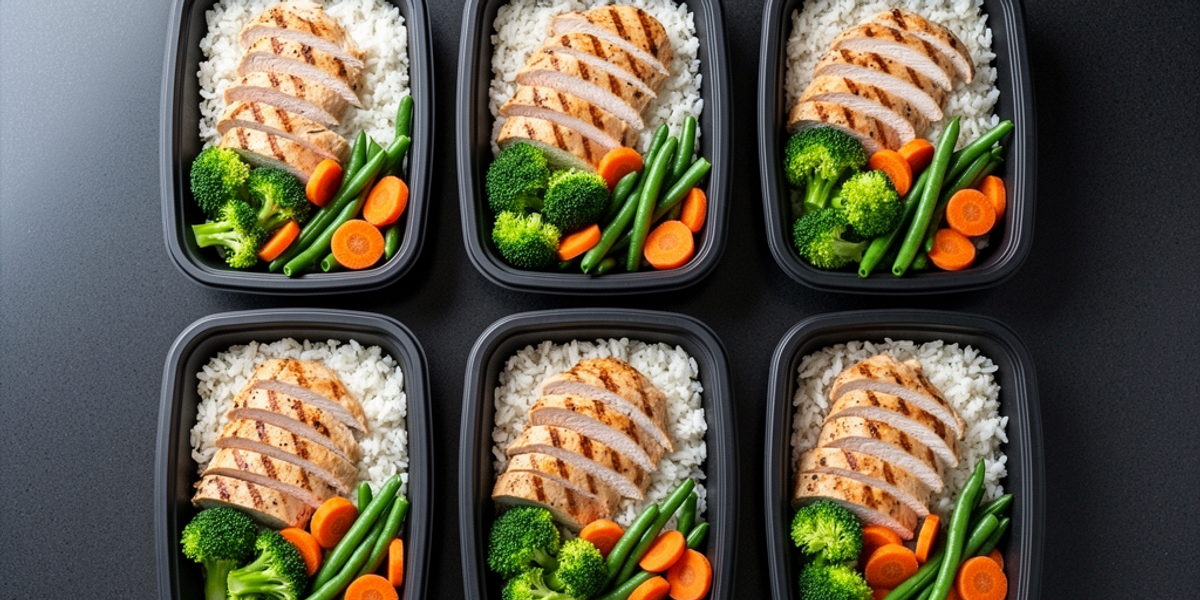
The fitness industry is a multi-billion-dollar machine fueled by your confusion. Every month, a new guru tries to sell you a secret: keto, carnivore, intermittent fasting, juice cleanses. They market complexity because complexity scales. It makes you feel like you need their app, their supplement, or their masterclass to succeed.
Here is the boring truth: eating for peak human performance is remarkably simple. It is not necessarily easy, but it is simple. If you want to build muscle, strip off body fat, and perform at a high level—whether in the weight room, on the mats, or in your career—you need to master the basics and execute them with ruthless consistency.
You do not need a fad diet. You need adequate calories, a high protein intake, whole foods, and a predictable eating schedule. Your body is a highly adaptable biological engine. If you give it the right raw materials, it will perform. If you feed it garbage, or if you constantly starve it in the name of a new diet trend, it will break down.
This is your no-BS guide to eating for performance. No fluff. No pseudo-science. Just the physiological realities of human nutrition and the exact protocols you need to implement today.
The Caloric Reality: Fueling the Machine
You cannot outwork a bad diet, and you cannot build a house out of thin air. Your body obeys the laws of thermodynamics. If you want to change your body composition or optimize your energy, you must understand your Total Daily Energy Expenditure (TDEE).
Your TDEE is the total number of calories you burn in a day. It consists of your Basal Metabolic Rate (the calories you burn just staying alive), the thermic effect of food (the energy required to digest your meals), and your physical activity (both exercise and non-exercise movement).
If you want to perform, you need to eat according to your goal:
- To build muscle and maximize strength: You need a caloric surplus. Eat 200-300 calories above your TDEE. You cannot build new tissue without excess energy. Stop trying to "maingain" if you are genuinely trying to get bigger and stronger. Eat the food.
- To lose fat while maintaining performance: You need a caloric deficit. Eat 300-500 calories below your TDEE. Any lower, and your testosterone will tank, your sleep will suffer, and your gym performance will plummet.
- To optimize daily performance: Eat at maintenance.
The Protocol: To find your baseline maintenance calories, multiply your current body weight (in pounds) by 14 if you are moderately active, or 16 if you train hard 4-6 days a week.
Example: A 180-pound man training 5 days a week: 180 x 15 = 2,700 calories per day to maintain.
Weigh yourself daily, track your intake, and adjust that number up or down by 200 calories depending on what the scale does over a two-week period.
Protein: The Structural Foundation
Protein is non-negotiable. It provides the essential amino acids required to repair muscle tissue damaged during training. If you are training hard and under-eating protein, you are simply breaking your body down without giving it the tools to rebuild.
Furthermore, protein is highly satiating. It keeps you full, which prevents you from snacking on processed garbage when you're bored.
The Protocol: Consume 0.8 to 1.2 grams of protein per pound of target body weight every single day.
If you weigh 180 pounds, your target is approximately 180 grams of protein. Divide that across 3 to 4 meals, and you are looking at 45 to 60 grams of protein per sitting.
Stick to high-bioavailability sources: lean beef, chicken breast, eggs, fish, Greek yogurt, and high-quality whey isolate. Plant proteins are fine as a supplement, but they generally have an incomplete amino acid profile and lower bioavailability. If you want to optimize for muscle protein synthesis, animal-based proteins are the gold standard.
Carbohydrates: High-Octane Fuel
At some point in the last decade, carbohydrates became the enemy. Gurus convinced men that eating a potato would instantly make them fat. This is physiological nonsense.
Carbohydrates are your body's preferred source of energy, especially for high-intensity, anaerobic activities like lifting heavy weights or sprinting. When you eat carbs, your body stores them in your muscles and liver as glycogen. When you train, your body taps into those glycogen stores to fuel muscle contractions.
If you cut carbs out of your diet, your glycogen stores deplete. Your workouts will feel sluggish, your pumps will disappear, and your recovery will drag. Worse, chronically low carbohydrate intake combined with hard training can elevate cortisol (your stress hormone) and lower testosterone.
The Protocol: Once you have set your protein and fat targets, fill the rest of your daily calories with carbohydrates. For most hard-training men, this falls between 1.5 to 3 grams of carbs per pound of body weight.
Focus on complex, single-ingredient carbohydrates: white rice, potatoes, sweet potatoes, oats, and fruit.
Timing matters: Concentrate the bulk of your carbohydrates in the meals before and after your training session. A meal consisting of lean protein and easy-to-digest carbs (like chicken and white rice) 90 minutes before training will dramatically improve your performance.
Dietary Fat: Hormonal Armor
During the 1990s, fat was demonized. Now, the pendulum has swung too far the other way, with people putting sticks of butter in their coffee. The truth, as always, is in the middle.
Dietary fat is essential. It is the raw material your body uses to produce hormones, including testosterone. It is also required for the absorption of fat-soluble vitamins (A, D, E, and K) and for maintaining joint health and cognitive function.
However, fat is calorically dense—9 calories per gram compared to 4 calories per gram for protein and carbs. It is very easy to overeat.
The Protocol: Consume 0.3 to 0.5 grams of fat per pound of body weight. For a 180-pound man, that is roughly 55 to 90 grams of fat per day.
Do not drop your fat intake below 0.3g/lb for extended periods, or your hormone profile will suffer. Get your fats from high-quality sources: whole eggs, olive oil, avocados, nuts, and the naturally occurring fats in your meat and fish. Avoid trans fats and highly processed seed oils (like soybean and corn oil) which can promote inflammation.
The Invisible Force Multipliers: Hydration and Micronutrients
You can nail your macros perfectly, but if you are chronically dehydrated and deficient in micronutrients, you will still perform like garbage.
Your muscles are roughly 75% water. A drop in hydration of just 2% of your body weight can lead to a 10% drop in physical performance. Dehydration destroys your strength, ruins your endurance, and compromises your joints.
Micronutrients (vitamins and minerals) are the spark plugs of your biological engine. Magnesium, zinc, potassium, and sodium dictate how well your muscles contract and how effectively you sleep.
The Protocol:
- Water: Drink a minimum of 1 gallon (3.7 liters) of water every day. If you are training hard and sweating heavily, push that to 1.5 gallons.
- Sodium: Stop fearing salt. If you train hard, you sweat out sodium. Salt your food to taste, and consider drinking half a teaspoon of sea salt mixed with water 30 minutes before your workout. The sodium pulls water into your cells, increasing blood volume and giving you a massive pump.
- Micros: Eat vegetables. Spinach, broccoli, bell peppers. If your diet consists entirely of chicken, rice, and protein powder, you are leaving health and performance on the table.
The Boring Protocol: How to Eat
The fitness industry loves to debate meal timing. Should you eat six small meals a day? Should you fast for 16 hours?
The reality is that total daily intake matters far more than meal timing. However, for optimal performance and muscle building, eating 3 to 4 evenly spaced meals per day is the most effective approach. This maximizes muscle protein synthesis (which peaks every 3-5 hours) and provides a steady stream of energy.
Adopt the 80/20 rule. 80% of your calories should come from whole, unprocessed, single-ingredient foods. Meat, eggs, vegetables, fruits, rice, potatoes, nuts. The remaining 20% can be whatever you want, provided it fits within your caloric and macronutrient targets. This prevents diet fatigue and makes the protocol sustainable for years, not just weeks.
Consistency is the ultimate separator between men who get results and men who just talk about getting results. Eating the same 3 to 4 meals at roughly the same times every day regulates your circadian rhythm, stabilizes your hunger hormones (ghrelin and leptin), and removes decision fatigue.
The 7-Day Performance Challenge
Reading this article means nothing if you do not execute. Knowledge without action is just entertainment.
Here is your challenge for the next 7 days. No excuses, no modifications.
- Track Everything: Download a food tracking app (like MyFitnessPal or MacroFactor). Weigh and log every single thing that enters your mouth for the next 7 days. You cannot manage what you do not measure. Find out what your baseline actually is.
- Hit Your Protein: Consume 1 gram of protein per pound of your body weight every day.
- Hydrate: Drink 1 gallon of water daily.
- Cut the Liquid Calories: Stop drinking soda, fruit juice, and alcohol for the next week. Drink water, black coffee, or plain tea.
Do this for 7 days. Notice how your energy stabilizes. Notice how your workouts improve. Notice how your sleep deepens.
Performance isn't an accident. It is the result of deliberate, consistent action. Stop looking for a shortcut, master the boring basics, and get to work.

Alex Rivera
Sports Nutritionist, CSCS
Certified sports nutritionist who cuts through supplement BS and diet fads. Alex writes about real food for real performance — no gimmicks.
View full profile →