The Stoic Operating System: Ancient Discipline for the Modern Man
Modern life is engineered for comfort, breeding weakness. Master the ruthless discipline of Marcus Aurelius, Seneca, and Epictetus to build an unbreakable mind and execute your goals without excuses.
Modern life is engineered to make you soft. Your food is delivered to your door. Your climate is controlled to a perfect 72 degrees. Your entertainment is infinite, on-demand, and perfectly designed by algorithms to hijack your dopamine receptors.
We live in the most comfortable era in human history, yet men are more anxious, distracted, and undisciplined than ever before. Why? Because the human animal was not built for perpetual comfort. Without friction, you decay. A sword left in the scabbard eventually rusts.
Over two thousand years ago, the Stoics figured this out. Stoicism wasn't a philosophy for academics arguing in ivory towers. It was an operating system for men in the arena. It was built for slaves like Epictetus, power-brokers like Seneca, and emperors like Marcus Aurelius. It is a pragmatic, battle-tested framework for dealing with extreme stress, unpredictable environments, and the heavy burden of duty.
If you are serious about self-improvement, you don't need another productivity hack. You don't need a motivational YouTube compilation. You need a paradigm shift. You need the ruthless, unsentimental discipline of the Stoics.
Here is how you apply ancient wisdom to modern execution.
Epictetus and the Dichotomy of Control
"Some things are in our control and others not." — Epictetus
This is the foundational rule of Stoicism. Epictetus was born a slave. He had a lame leg, permanently crippled by a former master. He had every excuse to play the victim, yet he became one of the most respected teachers in the Roman Empire. His secret was a ruthless division of reality into two distinct categories: what he could control, and what he couldn't.
Most men waste 80 percent of their mental bandwidth on things entirely outside their control. You get pissed off at traffic, frustrated by the economy, angry at the news cycle, and anxious about what other people think of you. This is a massive bleed of energy. Every ounce of focus you spend on the uncontrollable is stolen from your actual goals.
Anxiety is simply your brain trying to control a future it has no access to. It is an evolutionary glitch in the modern world. When you map out the dichotomy of control, you are literally shifting brain activity from the amygdala (the emotional, fear-based center) to the prefrontal cortex (the logical, executive center). This isn't just ancient philosophy; it is applied neuroscience.
To be disciplined, you must be ruthlessly efficient with your attention.
Protocol 1: The Daily Triage
Grab a piece of paper. Draw a line down the middle.
On the left side, write down everything causing you stress, anxiety, or friction right now. The economy, your boss's mood, the algorithm tanking your business reach, a nagging injury.
On the right side, write down exactly what you control regarding those specific issues.
You don't control the economy; you control your skill acquisition and your daily savings rate. You don't control your boss's mood; you control the undeniable quality of the report you hand in. You don't control the algorithm; you control your daily output and your ability to pivot. You don't control how fast your injury heals; you control your physical therapy routine and your diet.
Cross out the left side. Never spend another second thinking about it. Execute exclusively on the right side.
Seneca and Voluntary Discomfort
"Set aside a certain number of days, during which you shall be content with the scantiest and cheapest fare, with coarse and rough dress, saying to yourself the while: 'Is this the condition that I feared?'" — Seneca
Seneca was one of the wealthiest men in Rome. He had access to every luxury the ancient world could provide. Yet, he regularly practiced poverty. He would sleep on the hard floor, eat stale bread, and wear cheap clothes.
Why? Because he understood a psychological concept we now call hedonic adaptation. If you always have comfort, comfort becomes your baseline. When comfort is your baseline, the slightest inconvenience destroys your emotional state. You become fragile.
Modern science backs this up. When you constantly consume high-dopamine, low-effort rewards (junk food, endless scrolling, video games), your dopamine receptors down-regulate. Normal, hard tasks like reading, working out, or building a business suddenly feel impossible because they don't provide that instant spike.
Voluntary discomfort does the opposite. By engaging in low-dopamine, high-effort tasks, you up-regulate your receptors. You actually train your brain to find pleasure in the effort itself. When you intentionally subject yourself to hard things, you build a physiological buffer against stress. You inoculate yourself against weakness.
If you only do the work when you feel like it, you will lose to the man who does the work regardless of how he feels.
Protocol 2: The 30-Day Discomfort Challenge
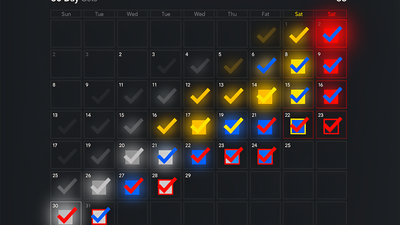
You need to intentionally inject friction into your life to remind your nervous system who is in charge. Pick one of the following and execute it every single day for the next 30 days. No days off. No excuses.
- Cold Exposure: 3 minutes of a freezing cold shower every morning. No easing into it. Turn the knob to cold, step in, and control your breathing. Force your mind to override your body's panic response.
- Fasting: A strict 16-hour fast every day. If you want to push it, do one 24-hour water fast every week. Learn what actual, physiological hunger feels like, not just psychological craving.
- Physical Crucible: Lift heavy or run until your lungs burn. Do 100 burpees for time. Your body is a tool; keep it sharp.
When your brain screams at you to stop, recognize that voice for what it is: weakness leaving the system.
Marcus Aurelius and the Duty of Action
"At dawn, when you have trouble getting out of bed, tell yourself: 'I have to go to work—as a human being. What do I have to complain of, if I'm going to do what I was born for?'" — Marcus Aurelius
Marcus Aurelius was the Emperor of the Roman Empire. He was the most powerful man on earth. If he wanted to sleep in until noon, eat grapes, and ignore his responsibilities, no one would have stopped him. But he didn't. He woke up early, went to his tent in the freezing Germanic frontier, and wrote Meditations—a private journal to keep himself disciplined.
Marcus didn't rely on motivation. Motivation is an unreliable, fleeting emotion that vanishes the moment things get hard. He relied on duty. He viewed his work as his fundamental purpose.
Stop asking yourself if you feel motivated. It is an entirely irrelevant question. You don't ask yourself if you feel motivated to brush your teeth or put on pants before leaving the house. You just do it because it is required. Treat your highest-leverage tasks with the same non-negotiable finality.
Marcus also practiced the concept of Amor Fati—loving one's fate. "The impediment to action advances action. What stands in the way becomes the way." You don't just tolerate the obstacle; you embrace it. If your flight is delayed, it's not a disaster; it's four uninterrupted hours to read or work. If you get injured, it's not a tragedy; it's an opportunity to focus on a different physical skill or mental toughness. Reframe every negative into a tactical advantage.
Protocol 3: The Zero-Friction Environment
Marcus Aurelius engineered his mindset for action. You need to engineer your environment. If you want to wake up at 5:00 AM to train, do not rely on morning willpower. Willpower is a finite resource that depletes throughout the day.
- Put your alarm clock across the room so you have to physically stand up to turn it off.
- Lay out your gym clothes the night before.
- Pre-mix your pre-workout or set the coffee maker on a timer.
Remove every single micro-decision between waking up and executing the task. Make failing harder than succeeding.
The Daily Architecture of a Stoic
Discipline is not a one-time event; it is a daily practice. The Stoics had specific routines to bookend their days. If you want to build an unbreakable mind, you need to structure your day with intention.
Morning: Premeditatio Malorum (The Pre-Mortem)
The Stoics practiced Premeditatio Malorum, which translates to the premeditation of evils. Every morning, take two minutes to visualize everything that could go wrong today.
Your client might cancel the big contract. Traffic might make you late. Your kid might throw a tantrum. Your workout might feel terrible.
This isn't pessimism; it's tactical preparation. If you anticipate the friction, you won't be derailed when it happens. You are mentally pre-loading your response. When the client cancels, you don't panic—you execute the contingency plan you already thought about at 6:00 AM. You remain unflappable while everyone else loses their minds.
Evening: The Interrogation
Seneca wrote about his evening routine: "When the light has been removed and my wife has fallen silent... I examine my entire day and go back over what I've done and said, hiding nothing from myself, passing nothing by."
You cannot improve what you do not measure. At the end of the day, sit down for five minutes and ask yourself three brutal questions:
- Where did I lack discipline today?
- Did I waste energy reacting to things outside of my control?
- What is the one thing I must execute tomorrow to move the needle?
Write the answers down. Brutal honesty is the only way to calibrate your behavior. If you acted like a coward, write it down. If you crushed your goals, write it down.
The Final Challenge
Philosophy without action is just mental masturbation. Reading an article about Stoicism does absolutely nothing for you. Applying it changes your life.
The modern world wants you soft, compliant, and comfortable. It wants you reacting emotionally to every minor inconvenience. Reject the default. Choose the path of friction.
Your Challenge for Today: Pick one task you have been procrastinating on because it is uncomfortable. It could be a difficult conversation, a brutal workout, or launching a project you are afraid will fail.
Do not wait for tomorrow. Do not wait until you feel ready. Apply Epictetus's dichotomy of control: you control your actions right now. Apply Marcus Aurelius's sense of duty: doing the work is what you are built for.
Execute the task today. Welcome the discomfort. That is how you forge discipline.

Marcus Reid
Discipline Coach & Former Army Ranger
Former Army Ranger turned discipline coach. Marcus writes about mental toughness, habit systems, and building the kind of resilience that doesn't break under pressure.
View full profile →