The True Cost of Alcohol on Male Performance: Testosterone, Sleep, and Recovery
Stop guessing why your progress in the gym and the boardroom has stalled. Discover the biological cost of alcohol on your testosterone, sleep, and recovery, and learn how to define an acceptable trade-off.
Most men are operating at 70% of their true capacity and have convinced themselves it is their 100%.
You dial in your macros. You train hard four to five days a week. You optimize your morning routine, take your supplements, and push for peak performance in your career. But come Friday night—or maybe just a random Tuesday evening—you pour a few drinks to "take the edge off."
I am not here to give you a moral lecture or tell you to embrace absolute prohibition. You are a grown man, and you get to choose your vices. But if you are serious about self-improvement, you need to stop lying to yourself about the biological bill you are racking up.
Alcohol is a cellular toxin. Your body treats it as a poison, and the moment it enters your bloodstream, your physiology shifts its entire focus to eliminating it. This metabolic emergency halts fat loss, blunts muscle growth, trashes your sleep architecture, and compromises your hormonal profile.
If you want to drink, fine. But do it with your eyes open. Here is the unvarnished truth about how alcohol affects your performance, and exactly how to manage the damage.
The Sleep Illusion: Passing Out Is Not Sleeping
Many men use a drink or two as a nightcap, claiming it helps them fall asleep. This is a fundamental misunderstanding of human biology. Alcohol is a central nervous system depressant. It does not help you sleep; it sedates you. Passing out and sleeping are two entirely different physiological states.
When you consume alcohol close to bedtime, it binds to GABA receptors in your brain, mimicking the effects of a tranquilizer. You lose consciousness quickly. But as your liver metabolizes the alcohol, your brain experiences a "rebound effect." It spikes the production of glutamate, an excitatory neurotransmitter, to counteract the sedative.
This chemical whiplash destroys your sleep architecture in several ways:
- REM Sleep Suppression: Alcohol drastically reduces Rapid Eye Movement (REM) sleep, especially in the first half of the night. REM is critical for cognitive function, memory consolidation, and emotional regulation. When you wake up feeling foggy and irritable, it is because you chemically bypassed your brain's maintenance cycle.
- Heart Rate and HRV: If you wear a fitness tracker, look at your data after a night of drinking. Your Resting Heart Rate (RHR) will often sit 10 to 15 beats per minute higher than your baseline. Your Heart Rate Variability (HRV)—the ultimate metric of nervous system recovery—will plummet. Your body is working overtime to clear toxins while you are supposedly resting.
- Body Temperature: Alcohol causes vasodilation (widening of blood vessels), which messes with your body's ability to lower its core temperature—a necessary trigger for deep, restorative sleep.
You might be in bed for eight hours, but biologically, you only got three hours of low-quality rest. You are starting the next day in a severe physiological deficit.
The Hormone Hijack: Testosterone and Cortisol
Testosterone is the biological currency of male vitality. It drives muscle growth, fat loss, drive, confidence, and cognitive sharpness. Alcohol actively works against your endocrine system to drain this account.
The relationship between alcohol and testosterone is dose-dependent, but the mechanisms are clear. When you consume alcohol, particularly in moderate to high amounts, several things happen:
- Increased Aromatization: Alcohol stimulates the aromatase enzyme, which is responsible for converting testosterone into estrogen. You are literally taking the hormone that makes you a man and chemically transforming it into the hormone that promotes fat storage and mood swings.
- Testicular Toxicity: Alcohol and its metabolic byproduct, acetaldehyde, are directly toxic to the Leydig cells in your testes, which are the primary production sites for testosterone.
- Cortisol Spikes: Heavy drinking triggers a massive release of cortisol, your body's primary stress hormone. High cortisol and high testosterone cannot coexist efficiently. When cortisol stays elevated, testosterone production is suppressed.
Even if you are just having two or three drinks, you are blunting the natural pulse of testosterone production that occurs overnight. If you are trying to build a formidable physique or maintain high energy levels, you are shooting yourself in the foot.
Muscle Protein Synthesis and Recovery
You crush a heavy leg day. You tear down muscle fibers, creating the micro-traumas necessary for growth. Then, you go out and have three beers. You just wasted your workout.
Muscle growth does not happen in the gym; it happens during recovery through a process called Muscle Protein Synthesis (MPS). Alcohol is a potent inhibitor of MPS. Studies have shown that consuming alcohol after a training session can reduce muscle protein synthesis by 24% to 37%, even if you consume optimal amounts of protein alongside it.
Why? Because your liver is the command center for recovery. It processes nutrients, manages glycogen storage, and facilitates the repair of tissues. But when alcohol is present, the liver drops everything else to deal with the toxin.
Your muscles are screaming for nutrients and repair, but your liver has put up a "Closed for Maintenance" sign until the alcohol is cleared. By the time your body is ready to resume recovery, the optimal anabolic window has slammed shut.
Body Composition: The Empty Calorie Trap
You already know alcohol has calories—7 calories per gram, to be exact. But the caloric density is only half the problem. The real issue is how alcohol alters your metabolism.
When you drink, your liver breaks down the alcohol into acetate. Acetate is toxic, so your body prioritizes burning it off before anything else. What does this mean for your body composition? It means fat oxidation (the burning of stored body fat) comes to a screeching halt.
Research indicates that consuming just two standard drinks can reduce whole-body lipid oxidation by up to 73%. For the next several hours, your body is burning acetate, not fat. Any food you eat during this window—especially fats and carbohydrates—is highly likely to be stored as adipose tissue.
Add to this the psychological effect. Alcohol lowers your inhibitions and spikes your appetite. Nobody craves grilled chicken breast and broccoli after four drinks. You crave pizza, burgers, and fries. You are stacking highly palatable, calorie-dense foods on top of a metabolism that has completely stopped burning fat. It is a recipe for a soft, average physique.
Defining Your Acceptable Trade-off
Here is where we get practical. Complete abstinence is the optimal biological choice. But life is not lived in a sterile laboratory. There are weddings, business deals, anniversaries, and genuine moments of celebration.
The goal is not to become an ascetic monk; the goal is to become an intentional operator. You need to define your acceptable trade-off.
Stop habitual drinking. Habitual drinking is having a beer every night just because you are watching Netflix. It is having a glass of wine because it is Tuesday and you had a stressful day at work. The Return on Investment (ROI) on these drinks is zero. You get no memorable experience, but you still pay the biological tax.
Reserve alcohol for intentional drinking. A toast at your best friend's wedding? High ROI. A rare bourbon to celebrate a massive business acquisition? High ROI.
If you choose to drink, own the decision and accept the cost. But do not let alcohol be a default setting in your life.
Protocols for Damage Control
When you do decide that the occasion warrants a drink, do not just throw your hands up and accept defeat. There are specific protocols you can execute to mitigate the damage to your sleep, testosterone, and recovery.
1. The 3-Hour Rule
Never consume alcohol within three hours of going to sleep. Give your liver time to metabolize the alcohol and clear the acetate from your bloodstream before your head hits the pillow. This is the single most effective way to protect your REM sleep and overnight testosterone production.
2. The 1-to-1 Water Protocol
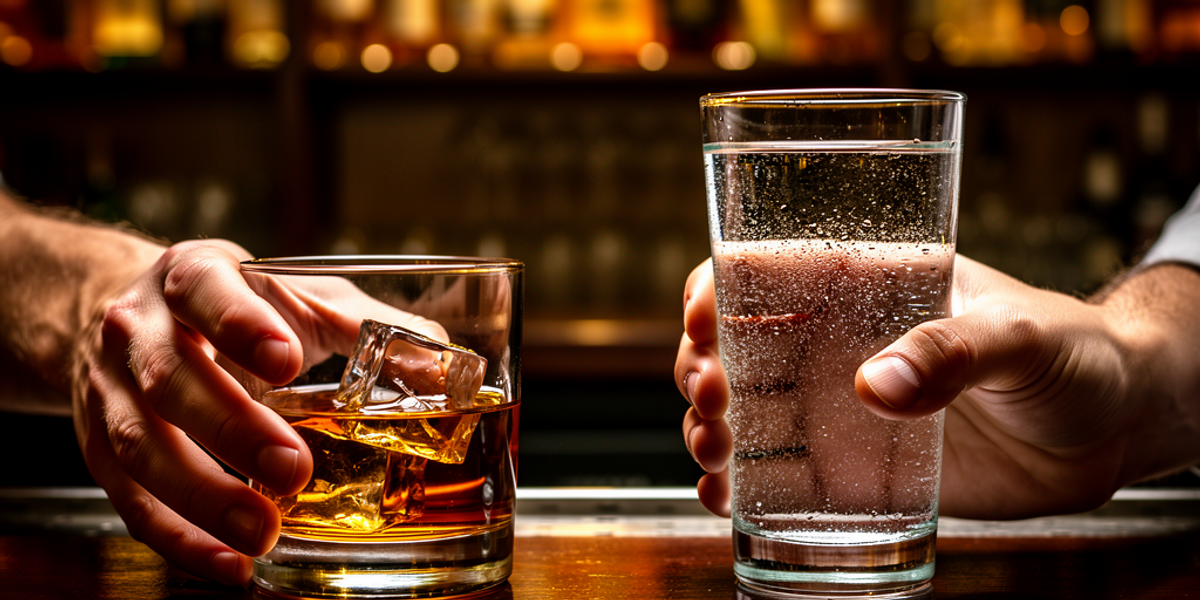
For every standard drink you consume, drink one full glass (8-10 oz) of water. Alcohol is a diuretic, meaning it forces your kidneys to expel water and essential electrolytes. Dehydration is the primary driver of the physical hangover. Force yourself to hydrate in real-time.
3. Choose Clear Over Dark
Dark liquors (whiskey, rum, brandy) and red wine contain high levels of congeners—toxic byproducts of the fermentation and aging process. Congeners dramatically increase the severity of hangovers and the inflammatory response in the body. If you are going to drink, stick to clear spirits like high-quality vodka or tequila mixed with soda water and lime.
4. Pre-game with Protein and NAC
Never drink on an empty stomach, but avoid eating high-fat or high-carb meals while drinking, as those calories will be stored as fat. Eat a lean, high-protein meal before you start.
Additionally, consider supplementing with N-Acetyl Cysteine (NAC) about 30 minutes before your first drink. NAC is a precursor to glutathione, your liver's master antioxidant. It helps your body process acetaldehyde (the toxic byproduct of alcohol) much more efficiently, significantly reducing cellular damage.
5. Electrolytes Before Bed
Before you go to sleep, consume a high-quality electrolyte powder (sodium, potassium, magnesium) in a large glass of water. This replenishes the minerals stripped from your body by alcohol's diuretic effect and helps stabilize your nervous system for sleep.
The Challenge: Establish Your Baseline
You cannot manage what you do not measure, and you cannot understand the cost of alcohol until you know what your absolute baseline feels like.
Here is your challenge: Take the next 30 days completely off alcohol. Zero drops.
This is not a moral cleanse; it is a data-gathering mission. For the next 30 days, track your sleep quality, your performance in the gym, your morning energy levels, and your mental clarity. Notice how much leaner your midsection gets without changing your diet. Notice how much more aggressive and focused you feel in your work.
Once you have felt what operating at 100% capacity is actually like, you can make an educated, adult decision about when and where you want to trade that feeling for a drink.
Stop accepting a subpar version of yourself just because society normalized a mild, persistent poison. Take control of your physiology, define your trade-offs, and start operating like the man you are capable of becoming. Start your 30 days today.

Alex Rivera
Sports Nutritionist, CSCS
Certified sports nutritionist who cuts through supplement BS and diet fads. Alex writes about real food for real performance — no gimmicks.
View full profile →