Sleep Is the Most Anabolic Thing You're Not Doing
Stop wasting money on supplements. If you aren't getting 7-9 hours of quality sleep, you're leaving testosterone, HGH, and muscle growth on the table. Here is the no-BS guide to optimizing sleep for maximum physical performance.
You are wasting your money. You spend hundreds of dollars a month on whey protein, creatine, pre-workouts, and maybe even a few "testosterone boosters" that do nothing but give you expensive urine. You track your macros down to the gram. You log every set and rep in your spreadsheet. You push yourself to failure in the squat rack because you want to grow, get stronger, and perform better.
But then you go home, scroll on your phone until 1:00 AM, and scrape together five and a half hours of garbage sleep before your alarm goes off.
You are stepping over hundred-dollar bills to pick up pennies.
Let's get one thing straight right now: You do not build muscle in the gym. The gym is where you go to cause microscopic trauma to your muscle tissue. The gym is a catabolic event—it breaks you down. You only build muscle, burn fat, and get stronger when you recover. And the undisputed king of recovery, the most highly anabolic state your body will ever enter, is deep sleep.
If you are serious about self-improvement, physical performance, and your long-term health, it is time to stop treating sleep like a luxury and start treating it like the foundational pillar of your biology.
Here is the unvarnished truth about what happens to your hormones, your brain, and your muscles when you sleep—and exactly what it costs you when you don't.
The Hormonal Reality: Why Sleep is Anabolic
Your endocrine system doesn't care about your work deadlines, your Netflix queue, or your hustle-culture mindset. It operates on a biological clock, and it requires specific conditions to produce the hormones that make you look and feel like a capable man.
Testosterone: The Ultimate Casualty of Sleep Deprivation
Testosterone is the hormone that drives muscle protein synthesis, bone density, effort, and libido. If you want to kill your testosterone production without touching a single pharmaceutical, just cut your sleep short.
A landmark study published in the Journal of the American Medical Association (JAMA) took healthy young men and restricted their sleep to five hours per night for just one week. The results? Their testosterone levels dropped by 10% to 15%.
To put that in perspective, your testosterone naturally declines by about 1% to 2% per year as you age. By sleeping five hours a night, you are effectively aging your endocrine system by a decade. You are voluntarily castrating your hormonal profile. If you want high baseline testosterone, you need 7 to 9 hours of sleep. There is no supplement on earth that will out-work a sleep-deprived endocrine system.
Human Growth Hormone (HGH): The Night Shift
Human Growth Hormone is responsible for cellular repair, muscle growth, and fat metabolism. It is the ultimate anti-aging and recovery compound.
Here is the catch: You do not get a steady drip of HGH throughout the day. Up to 70% of your daily HGH production is released in massive pulses during the first phase of deep sleep (slow-wave sleep), which typically occurs in the first third of your night.
If you go to bed late, drink alcohol before bed, or have fragmented sleep, you miss this slow-wave window. When you miss the window, you miss the HGH pulse. Your muscles don't repair, your joints stay inflamed, and you wake up feeling like you were hit by a truck.
Cortisol: The Catabolic Killer
Cortisol is your body's primary stress hormone. You need it to wake up in the morning and to survive acute threats. But when cortisol stays elevated chronically, it is highly catabolic—meaning it actively breaks down muscle tissue to convert it into glucose for immediate energy.
Sleep deprivation signals to your body that you are in a state of emergency. Your baseline cortisol levels spike. This not only eats away at the muscle you worked so hard to build, but elevated cortisol also signals your body to store visceral fat around your midsection. If you are training hard, eating right, but still have a layer of stubborn belly fat, your sleep-deprived cortisol levels are likely the culprit.
The Performance Metrics: Strength, CNS, and Insulin
Beyond hormones, sleep governs the mechanical and neurological systems required to push heavy weight and perform at a high level.
Central Nervous System (CNS) Recovery
Lifting heavy weights isn't just a muscular endeavor; it is a massive neurological demand. Your Central Nervous System is the electrical grid that tells your muscle fibers to contract. When you train heavy—especially with compound movements like deadlifts and squats—you drain your CNS.
CNS fatigue takes much longer to clear than muscular fatigue. The only time your CNS truly resets and clears out neurotoxic waste products (like adenosine) is during sleep. If you are chronically under-sleeping, your CNS remains fatigued. You will walk into the gym, the weight will feel 20% heavier than it should, your grip will be weak, and your explosive power will be gone. You cannot out-will a fried nervous system.
Insulin Sensitivity and Nutrient Partitioning
When you eat a bowl of rice or a steak, your body releases insulin to shuttle those nutrients into your cells. Where those nutrients go—whether they are stored as muscle glycogen or body fat—depends on your insulin sensitivity.
Just four days of sleep deprivation can reduce your insulin sensitivity by up to 30%. When you are insulin resistant, your muscle cells "lock their doors." The protein and carbs you eat cannot easily get into the muscle to facilitate repair. Instead, your body takes those calories and shunts them directly into fat cells. You can eat a perfect caloric surplus for muscle growth, but if you are sleep deprived, you will primarily gain fat, not muscle.
The "I Only Need 5 Hours" Delusion
Let's address the elephant in the room: The hustle-culture myth that "sleep is the cousin of death" and that successful men only need four or five hours of sleep.
Stop lying to yourself.
There is a genetic mutation (the DEC2 gene) that allows a tiny fraction of the human population to function optimally on six hours of sleep or less without cognitive or physical decline. The percentage of the population with this gene is less than 1%. Statistically speaking, you do not have it.
You have simply adapted to feeling like garbage. You have forgotten what it feels like to be fully recovered, sharp, and hormonally optimized. You are running a Ferrari on diesel fuel and wondering why it's knocking.
The Anabolic Sleep Protocol: What to Do TODAY
Understanding the science is useless if you don't change your behavior. If you want to optimize your hormones and recovery, you need to treat your sleep with the same aggression and discipline you apply to your training.
Here is the exact protocol to fix your sleep starting tonight.
1. The 3-2-1 Rule for Pre-Bed
Your wind-down routine dictates the quality of your sleep. Implement this rule:
- 3 Hours Before Bed: No more food. Digesting a heavy meal raises your core body temperature and prevents you from entering deep, restorative sleep. Give your GI tract time to empty.
- 2 Hours Before Bed: No more work. Shut down the laptop. Stop checking emails. You need to lower your sympathetic nervous system (fight or flight) and engage your parasympathetic nervous system (rest and digest).
- 1 Hour Before Bed: No more screens. The blue light from your phone and TV destroys your natural melatonin production. Read a physical book, stretch, or talk to your partner.
2. Drop the Temperature
To fall asleep and stay asleep, your core body temperature needs to drop by about 1 to 2 degrees Fahrenheit. If your room is too warm, your body fights this process, leading to restless, fragmented sleep.
Set your bedroom temperature between 65°F and 67°F (18.3°C - 19.4°C). It should feel slightly chilly when you walk in. Use a high-quality blanket to stay comfortable, but let the ambient air remain cool.
3. Anchor Your Circadian Rhythm with Morning Light
Your sleep cycle is governed by a biological clock located in the hypothalamus of your brain. This clock is set by light exposure.
Within 30 minutes of waking up, go outside and get direct sunlight in your eyes for 10 to 15 minutes. Do not wear sunglasses. Do not look through a window (glass filters out the specific light wavelengths you need). This morning light exposure triggers a healthy spike of cortisol to wake you up and sets a biological timer that will naturally release melatonin 14 to 16 hours later.
4. The Caffeine Curfew
Caffeine has a quarter-life of about 10 to 12 hours. If you drink a 200mg pre-workout at 4:00 PM, you still have 50mg of active caffeine binding to the adenosine receptors in your brain at 2:00 AM.
You might think, "I can drink coffee and fall right asleep." Falling asleep is not the problem; sleep architecture is the problem. Caffeine in your system destroys your slow-wave deep sleep, robbing you of that crucial HGH pulse.
Set a hard caffeine curfew. No coffee, no energy drinks, and no pre-workout after 12:00 PM (or 2:00 PM at the absolute latest).
5. Strategic Supplementation
Most over-the-counter sleep aids rely on synthetic melatonin, which can disrupt your body's natural production and leave you groggy. Instead, use supplements that naturally downregulate your nervous system.
Thirty to sixty minutes before bed, take:
- Magnesium Bisglycinate or Threonate (200-400mg): Relaxes the central nervous system and muscles.
- L-Theanine (100-200mg): An amino acid found in green tea that increases GABA and alpha brain waves, reducing anxiety and racing thoughts.
- Apigenin (50mg): A derivative of chamomile that acts as a mild sedative.
Leave the synthetic sleep drugs alone. Fix the environment and the routine first.
6. Blackout Your Room
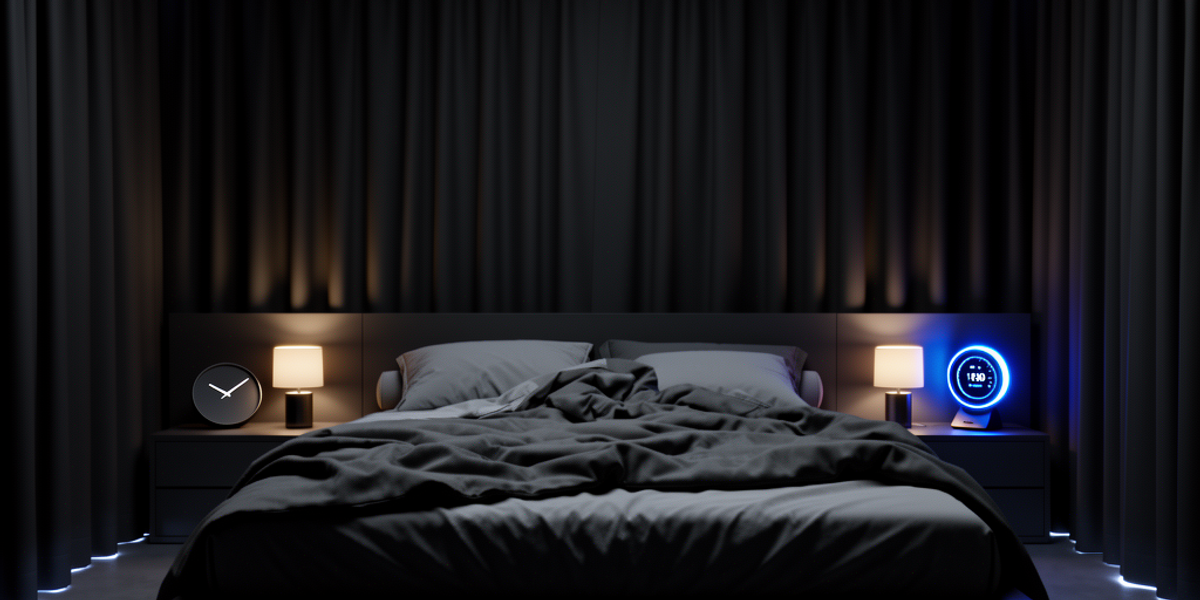
Your skin and eyes have receptors that can detect even minute amounts of light in the room, which suppresses melatonin. Your bedroom should be a cave. Buy blackout curtains. Put a piece of black tape over the glowing LED lights on your smoke detector or air purifier. If you cannot make the room pitch black, invest in a high-quality sleep mask.
The Challenge: Your Next 7 Days
Information without execution is just entertainment. It's time to put this into practice.
For the next 7 days, I challenge you to make sleep your number one priority. Treat your bedtime with the same non-negotiable respect you give your workouts.
- Set an alarm for 8.5 hours before you need to wake up. When that alarm goes off, your wind-down routine begins.
- Cut the caffeine at noon.
- Get the sunlight in your eyes every morning.
- Make the room cold and dark.
Track your metrics. Watch what happens to your morning resting heart rate. Notice the increase in your grip strength when you walk into the gym. Pay attention to your mood, your libido, and your focus at work.
When you finally give your body the 7 to 9 hours of high-quality, uninterrupted sleep it requires, you will realize you haven't been operating at your true baseline for years. You have been playing the game on hard mode.
Stop buying shortcuts. Turn off your phone. Go to sleep. Grow.

Jake Novak
Strength Coach & Performance Specialist
Certified strength and conditioning coach with 12 years of experience training athletes and everyday men. Jake focuses on functional strength that translates to real life.
View full profile →