How to Build Grip Strength That Transfers to Everything
Your grip is your physical interface with the world. Discover why hand strength is the ultimate predictor of longevity, and learn the exact protocols to build a vice-like grip that translates to heavier lifts and real-world power.
Your grip is your physical interface with the world.
Whether you are pulling a heavy deadlift off the floor, wrestling an opponent, carrying luggage through an airport, or using a hand tool, your hands are the point of contact. You can have the strongest back, legs, and core in the world, but if your hands cannot hold onto the weight, that strength is entirely useless.
Most men treat grip strength as an afterthought. They strap up for every heavy pull, rely on mixed grips, and finish their workouts with a few half-hearted wrist curls. This is a mistake. Grip strength is not a party trick; it is the foundation of functional, real-world power.
Science backs this up. The Prospective Urban Rural Epidemiology (PURE) study, which tracked nearly 140,000 adults across 17 countries, found that grip strength is a more accurate predictor of cardiovascular health and all-cause mortality than blood pressure. A weak grip is a biological warning sign. A strong grip indicates a robust, resilient nervous system and a body built to last.
Building a vice-like grip requires more than just squeezing a plastic stress ball. It requires targeted, heavy, and uncomfortable work. Here is exactly how to build grip strength that transfers to everything you do.
The Science of Grip and Irradiation
Before diving into the movements, you need to understand why grip strength makes your entire body stronger.
It comes down to a neurological principle called Sherrington's Law of Irradiation. This law states that a muscle working hard recruits the neighboring muscles to help. When you squeeze a bar with maximum force, that neurological signal doesn't stay in your hands. It irradiates up your forearms, into your biceps, triceps, shoulders, and lats.
Try this right now: Hold your arm out in front of you and squeeze your fist as hard as you possibly can. You will feel your forearm tense, but you will also feel your bicep contract, your shoulder stabilize, and your lat engage.
A strong grip acts as a neurological amplifier. When you grip a barbell tightly, you automatically pack your shoulders and brace your core, creating a rigid structure that transfers force efficiently. If your grip is weak, your brain senses the instability and naturally down-regulates the amount of force your larger muscles can produce to protect you from injury. Fix your grip, and your deadlift, pull-up, and overhead press will naturally increase.
There are three primary types of grip strength you need to develop:
- Crush Grip: The power between your fingers and your palm (e.g., shaking hands, holding a baseball bat).
- Support Grip: The ability to hold onto something heavily loaded for an extended period (e.g., deadlifts, carrying heavy bags).
- Pinch Grip: The strength between your fingers and your thumbs (e.g., holding a thick plate, grappling).
To build functional hands, you must train all three. Here are the four core movements you need to implement.
The Farmer's Carry: The King of Support Grip
The Farmer's Carry is the most brutally effective functional exercise in existence. It is simple: pick up heavy weights and walk. But its simplicity hides its effectiveness. It builds immense support grip, fortifies your core, builds your traps, and tests your mental fortitude.
Most guys go too light. If you can walk for two minutes without dropping the weight, you are doing cardio, not building strength.
The Protocol
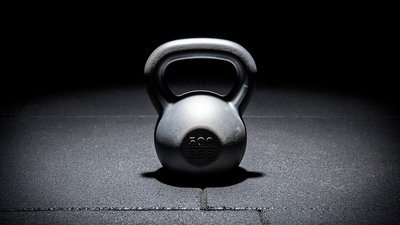
- Target Weight: Your goal should be to carry half your body weight in each hand. If you weigh 200 pounds, you are aiming to carry a 100-pound dumbbell or kettlebell in each hand.
- The Setup: Stand between the weights. Hinge down, grip the handles dead-center. Brace your core, squeeze your glutes, and stand up violently.
- The Walk: Keep your chest up and your shoulders pulled back and down. Do not let the weight pull your shoulders forward into a rounded posture. Take short, fast, choppy steps.
- The Metric: Aim for 3-4 sets of 30 to 45 seconds of walking. If you drop the weight before 30 seconds, it's too heavy. If you can walk past 45 seconds, it's time to up the weight.
Do not use lifting straps. The entire point of this movement is to force your hands to adapt to the load.
Dead Hangs: Endurance and Shoulder Health
If the Farmer's Carry is about moving under heavy load, the dead hang is about static endurance and structural health. Hanging from a bar is an evolutionary movement we have largely abandoned, and our shoulders and hands have suffered for it.
Dead hangs build incredible support grip endurance, but their secondary benefits are just as vital. Hanging decompresses the spine, stretches the lats, and creates space in the shoulder joint, which can alleviate years of impingement and desk-bound posture.
The Protocol
There are two types of hangs: passive and active. You need both.
Passive Hang: Grab the bar with a slightly wider-than-shoulder-width grip. Let your body go completely limp. Let your shoulders rise to your ears. Breathe deeply into your belly. This stretches the connective tissue and decompresses the spine.
Active Hang: From the passive position, pull your shoulder blades down and together. Your ears should move away from your shoulders. Your core should be tight. This builds the stabilizing muscles of the scapula.
- The Metric: Your initial goal is to accumulate 2 minutes of hanging per day. You can break this up into 30-second or 45-second intervals.
- The Standard: A respectable standard for a healthy male is a strict, unbroken 2-minute passive hang. If you cannot do this, your grip endurance is a liability.
Towel Pull-Ups: The Ultimate Crush Grip Builder
A standard pull-up bar is roughly one inch in diameter. It is designed to be easy to hold. The real world does not offer perfect, knurled, one-inch handles. If you want to build a crush grip that translates to grappling, climbing, or manual labor, you need to increase the thickness and change the texture of what you are pulling.
Towel pull-ups are the equalizer. They force your hands to crush inward to prevent slipping, heavily recruiting the muscles of the forearms and fingers.
The Protocol
- The Setup: Drape two thick gym towels over a pull-up bar, spaced at shoulder width. Grab one towel in each hand. You must crush the fabric together; do not just hook your fingers through a loop.
- The Execution: Perform a standard pull-up. Keep your core tight and pull your chest toward your hands.
- The Metric: Towel pull-ups are significantly harder than standard pull-ups. If you can normally do 10 strict pull-ups, expect to get 4 or 5 with towels. Aim for 3 sets to near failure.
- Regression: If you cannot perform a towel pull-up, perform towel hangs. Wrap the towels, grip them hard, and hang for as long as possible. Once you can hang for 45 seconds, start working on the pull-ups.
Plate Pinches: Bulletproofing the Thumbs
Look at your hand. Your four fingers are strong, but your thumb is the anchor. In almost every grip failure—whether a deadlift slipping or a heavy bag dropping—the thumb is the first thing to give out. The pinch grip isolates the thumb and the muscles of the thenar eminence (the meaty part of your palm at the base of your thumb).
The Protocol
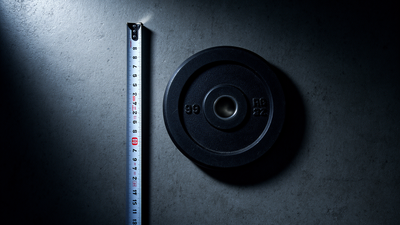
- The Setup: Take two smooth-sided iron weight plates. Start with two 10-pound plates. Place them together so the smooth sides are facing outward.
- The Execution: Pinch the plates together using only your fingers and your thumb. Do not hook your fingers under the lip of the plate. Stand up and hold the plates at your side.
- The Metric: Aim for 3 sets of 30 to 45 seconds per hand.
- Progression: Once you can pinch two 10-pound plates for 60 seconds, move up to two 25-pound plates, or add a third 10-pound plate to the stack to increase the width of the pinch. Wide pinches are exponentially harder than narrow pinches.
Programming: Putting It Together
You do not need a dedicated 'grip day.' In fact, dedicating a whole day to grip will likely fry your central nervous system and leave you with tendonitis. The muscles and tendons of the forearm are small and dense; they respond best to high frequency and consistency, not massive, isolated volume.
Stop using lifting straps for your warm-up and working sets. Reserve straps only for your absolute heaviest top sets of deadlifts or rows where the target muscle (the back) would be shortchanged by a failing grip. For everything else, use your bare hands.
Integrate the four core movements into your existing routine twice a week at the end of your workouts.
Workout A (End of Session):
- Farmer's Carries: 4 sets x 40 seconds (heavy)
- Plate Pinches: 3 sets x 30-45 seconds per hand
Workout B (End of Session):
- Towel Pull-ups (or Towel Hangs): 3 sets to failure
- Dead Hangs: Accumulate 2 minutes total time
Do not rush the progression. Tendons adapt much slower than muscle bellies. If you feel sharp pain in your elbows (medial or lateral epicondylitis), back off the volume and focus on tissue release and recovery.
The 30-Day Grip Challenge
Information without execution is useless. If you are serious about upgrading your physical hardware, start here.
For the next 30 days, implement this daily habit: Accumulate 2 minutes of dead hanging every single day.
It doesn't matter if you do it at the gym, on a tree branch, or on a doorway pull-up bar at home. Break it up however you need to—four sets of 30 seconds, or two sets of 60 seconds. Just get the 2 minutes done.
By the end of the 30 days, your shoulders will feel remarkably fluid, your posture will improve, and your grip will be noticeably harder. You will stop dropping heavy deadlifts, you will carry heavier loads with ease, and you will possess the kind of functional, raw hand strength that commands respect.
Your hands are your connection to the physical world. Make them unbreakable.

Jake Novak
Strength Coach & Performance Specialist
Certified strength and conditioning coach with 12 years of experience training athletes and everyday men. Jake focuses on functional strength that translates to real life.
View full profile →