How to Fix Your Posture in 30 Days: The Desk Worker's Protocol
You spend 40 hours a week folded in a chair. It’s destroying your joints, your confidence, and your biomechanics. Here is the exact 30-day protocol to fix forward head, rounded shoulders, and anterior pelvic tilt.
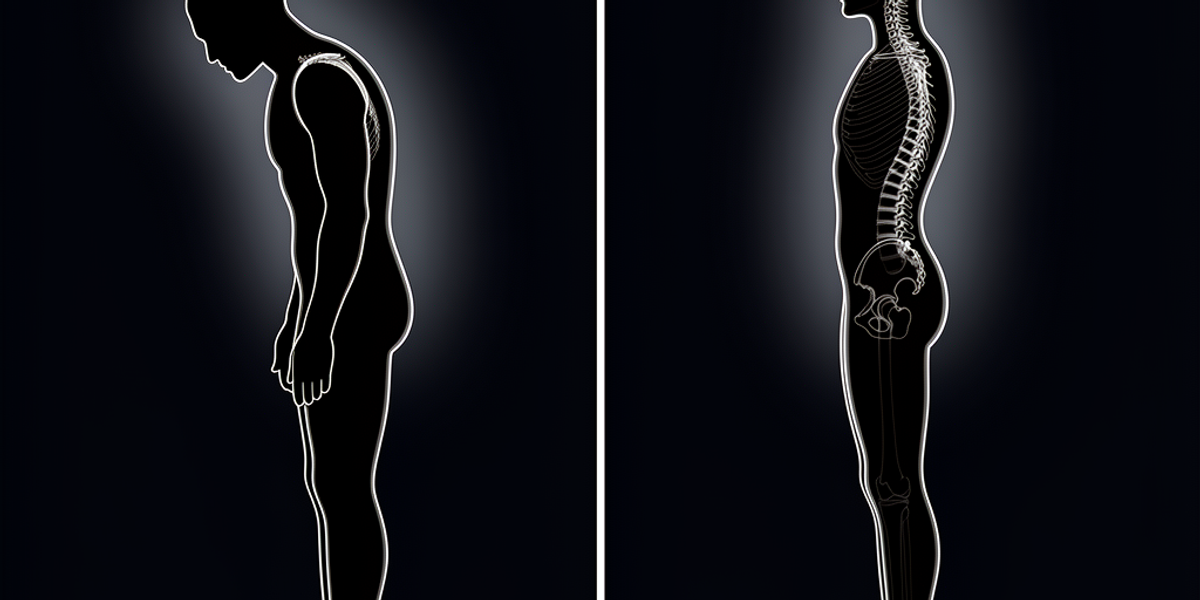
Look in the mirror. Relax your body and stand naturally. If you're like 90% of modern men, your shoulders are slumped forward, your neck is craning out like a vulture looking at a smartphone, and your lower back has a deep, unnatural arch.
You are shaped like a cashew.
Your desk job might be paying the bills, but it is actively destroying your biomechanics. Physics doesn't care about your deadlines or your commute. When you sit hunched over a keyboard for eight hours a day, your body adapts to that position. Tissues shorten, muscles atrophy, and joints lock up.
Bad posture isn't just an aesthetic issue, though it certainly makes you look shorter, weaker, and less confident. It's a mechanical failure. It leads to chronic neck pain, rotator cuff impingements, shallow breathing, and blown-out spinal discs.
You don't need a pep talk, and you don't need a posture brace that does the work for your muscles. You need a protocol. You need to manually un-fuck your biomechanics by stretching what is tight and strengthening what is weak.
Here is the exact 30-day protocol to unfold your body, fix your posture, and reclaim your natural stance.
The Big Three Postural Killers
Before you fix the machine, you need to understand how it's broken. The modern desk worker suffers from three distinct but interconnected structural failures. In physical therapy, these are known as Vladimir Janda's Upper and Lower Crossed Syndromes.
1. Forward Head Posture (The 40-Pound Bowling Ball)
An adult human head weighs about 10 to 12 pounds. When your ears are aligned directly over your shoulders, your skeletal structure supports this weight effortlessly. However, for every inch your head moves forward from its neutral center of gravity, the load on your neck muscles doubles. If your head is three inches forward—a common side effect of staring at a monitor—your neck and upper back are fighting to hold up 42 pounds of pressure all day long. This is why you have tension headaches and rock-hard, painful traps.
2. Rounded Shoulders (Upper Crossed Syndrome)
When you type, your arms are in front of you. Over time, your pectoral (chest) muscles and anterior deltoids shorten and tighten. Simultaneously, the muscles in your mid-back—your rhomboids and lower trapezius—become stretched out, weak, and neurologically "turned off." Your chest pulls your shoulders forward, and your back is too weak to pull them back.
3. Anterior Pelvic Tilt (Lower Crossed Syndrome)
Sitting is the enemy of the hips. When you sit, your hip flexors (the muscles on the front of your hips) are in a constantly shortened position. Over years, they tighten like steel cables. Meanwhile, your glutes—the largest, most powerful muscles in your body—are stretched out and inactive. When you finally stand up, those tight hip flexors pull the front of your pelvis down, causing your glutes and gut to stick out, creating a massive, painful arch in your lower back.
The 30-Day Posture Protocol
To fix this, you must follow a two-pronged attack: Release the brakes (stretch the tight anterior muscles) and build the engine (strengthen the weak posterior muscles).
Consistency is your only metric for success here. Doing this protocol for 10 minutes every single day will yield massive results. Doing it for an hour once a week will do absolutely nothing.
Step 1: Release the Brakes (Mobility)
You cannot strengthen your back if your chest is so tight it won't let your shoulders move. You must mobilize the front of your body first.
The Couch Stretch (Hip Flexors)
This is the single most important stretch for a desk worker. It will be brutally uncomfortable at first.
- How to do it: Back your feet up against a wall or the front of a couch. Drop your right knee to the floor, wedging it into the corner where the floor meets the wall. Your right shin should be vertical against the wall. Plant your left foot flat on the floor in front of you (like a lunge). Now, squeeze your right glute and lift your torso upright.
- The Goal: Do not let your lower back arch. The stretch must be felt in the front of the right hip and thigh.
- Prescription: 2 minutes per leg, every day.
The Doorway Pec Stretch (Chest)
Stop trying to stretch your back. Your back is already overstretched. You need to open your chest.
- How to do it: Stand in a doorway. Raise your right arm to a 90-degree angle (like you're swearing an oath) and place your forearm against the doorframe. Gently step forward with your right foot until you feel a deep stretch across your right pectoral muscle and the front of your shoulder.
- The Goal: Keep your ribs down. Do not arch your back to get a deeper stretch.
- Prescription: 1 minute per side, every day.
Thoracic Extensions (Mid-Back)
Your thoracic spine (mid-back) is designed to rotate and extend. Sitting locks it into a permanent flexed (rounded) position.
- How to do it: Place a foam roller on the floor. Lie on your back with the roller positioned horizontally across your mid-back, right at the bottom of your shoulder blades. Support your head with your hands. Keep your glutes on the floor and gently extend your upper back over the roller.
- The Goal: Only move your mid-back. Do not let your lower back arch.
- Prescription: 15 slow extensions, breathing out as you lean back.
Step 2: Build the Engine (Strengthening)
Once the tight muscles are released, you must immediately train the weak muscles to hold your skeleton in its new, proper alignment.
Band Pull-Aparts (Rhomboids & Traps)
This is the undisputed king of postural correction exercises. Buy a light resistance band. Keep it at your desk.
- How to do it: Hold the band in front of you with straight arms, hands shoulder-width apart, palms facing up. Squeeze your shoulder blades together and pull the band apart until it touches your sternum. Slowly return to the starting position.
- The Goal: The movement must come from your back, not your arms. Imagine crushing a walnut between your shoulder blades.
- Prescription: 3 sets of 20 reps daily.
Glute Bridges (Posterior Chain)
You need to wake up your glutes so they can pull your pelvis back into a neutral position.
- How to do it: Lie on your back with your knees bent and feet flat on the floor, hip-width apart. Brace your core (like you're about to take a punch to the gut). Drive through your heels and squeeze your glutes to lift your hips toward the ceiling.
- The Goal: At the top, your body should form a straight line from your knees to your shoulders. Hold the top position for a brutal 2-second squeeze.
- Prescription: 3 sets of 15 reps daily.
Wall Chin Tucks (Deep Neck Flexors)
This fixes the "vulture neck" by strengthening the tiny muscles at the front of your cervical spine.
- How to do it: Stand with your back and head flat against a wall. Without lifting your chin, pull your head straight back into the wall, giving yourself a double chin.
- The Goal: You should feel a stretch at the base of your skull and a contraction in the front of your throat.
- Prescription: 3 sets of 10 reps, holding each rep for 3 seconds.
Heavy Farmer’s Walks (Total Body Integration)
Posture is ultimately about load management. The Farmer's Walk forces your entire body into perfect alignment under heavy resistance.
- How to do it: Grab two heavy dumbbells or kettlebells (aim for at least half your body weight combined). Stand tall, crush the handles, pull your shoulders back and down, and walk with perfect, upright posture.
- The Goal: Do not let the weights pull your shoulders forward. Walk like you own the room.
- Prescription: 3 sets of 40 yards (or 45 seconds of walking), 2-3 times a week.
Step 3: Rewire Your Environment
You cannot out-train 40 hours of bad habits with 10 minutes of exercise. If you don't fix your environment, you are bailing water out of a sinking boat.
1. Fix Your Monitor: The top third of your computer screen must be at eye level. If you are looking down at a laptop on a desk, you are actively destroying your neck. Buy a laptop stand and an external keyboard today.
2. The 30/3 Rule: Physics demands movement. Set a timer. For every 30 minutes of sitting, you must stand up and move for 3 minutes. Do a set of band pull-aparts, walk to the kitchen, or do a doorway stretch. Break the static hold.
3. Breathe Through Your Nose: Mouth breathing forces your head forward to open the airway and relies on accessory neck muscles to lift the ribcage, tightening your traps. Close your mouth. Breathe through your nose, driving the air down into your diaphragm.
Your Daily 12-Minute Routine
Stop overcomplicating it. You don't need a gym to do this. You need 12 minutes, a doorway, a wall, and a resistance band. Do this every morning before you sit down to work, or every evening when you log off.
- Thoracic Extensions on Foam Roller: 15 slow reps.
- Doorway Pec Stretch: 1 minute per side.
- Couch Stretch: 2 minutes per side.
- Glute Bridges: 3 sets of 15 reps (2-second pause at the top).
- Band Pull-Aparts: 3 sets of 20 reps (palms up).
- Wall Chin Tucks: 3 sets of 10 reps (3-second hold).
(Add Heavy Farmer's Walks to your regular gym days 2-3 times a week).
The 30-Day Challenge
Knowledge without action is just entertainment. Reading this article won't fix your back.
Here is your challenge: Take a side-profile photo of yourself standing relaxed today. Don't force good posture; just stand how you normally stand. Look at the forward head. Look at the rounded shoulders. Own the reality of your current physical state.
For the next 30 days, execute the 12-minute routine above. No days off. No excuses about being too busy. It is 12 minutes.
Fix your monitor height. Keep a resistance band on your desk.
In 30 days, take another side-profile photo. You will be taller. Your chest will be open. Your jawline will look sharper because your head is actually sitting on your shoulders where it belongs. You will breathe deeper, and that chronic dull ache in your lower back will be gone.
Unfold your body. Reclaim your stance. Start today.

Jake Novak
Strength Coach & Performance Specialist
Certified strength and conditioning coach with 12 years of experience training athletes and everyday men. Jake focuses on functional strength that translates to real life.
View full profile →